

This month’s Natural Note showcases the Hyacinth Macaw. Over my long career as a wildlife and nature photographer, I’ve been fortunate to spend time with some of the most beautiful birds in the world. A few stand out for their exceptional colors and regal elegance. One of those birds is the Hyacinth Macaw.
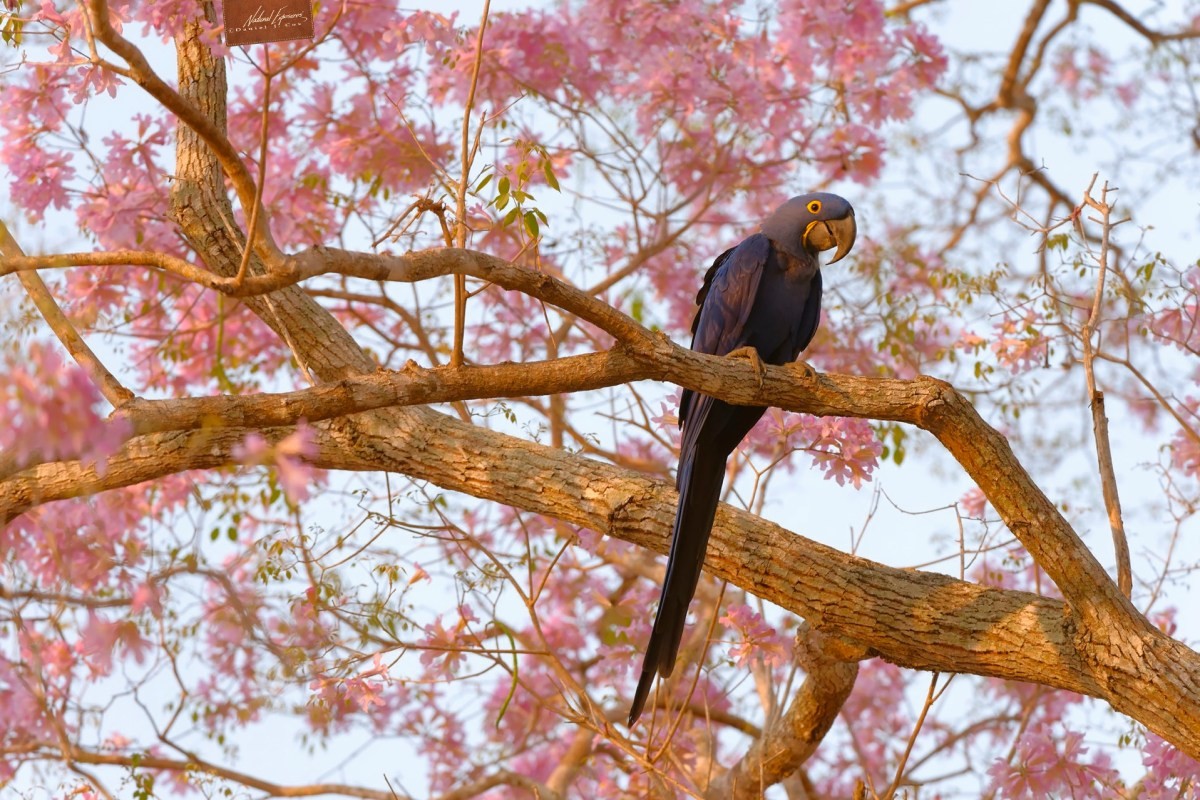
Amazing Bird Opportunities
Many of you are familiar with our photo tour to the Pantanal, where we photograph jaguars. However, few realize the amazing bird opportunities we encounter while searching for the elusive cats. For many years, we’ve been visiting a special place where the Hyacinth Macaw is a regular visitor, giving us world-class photo opportunities.
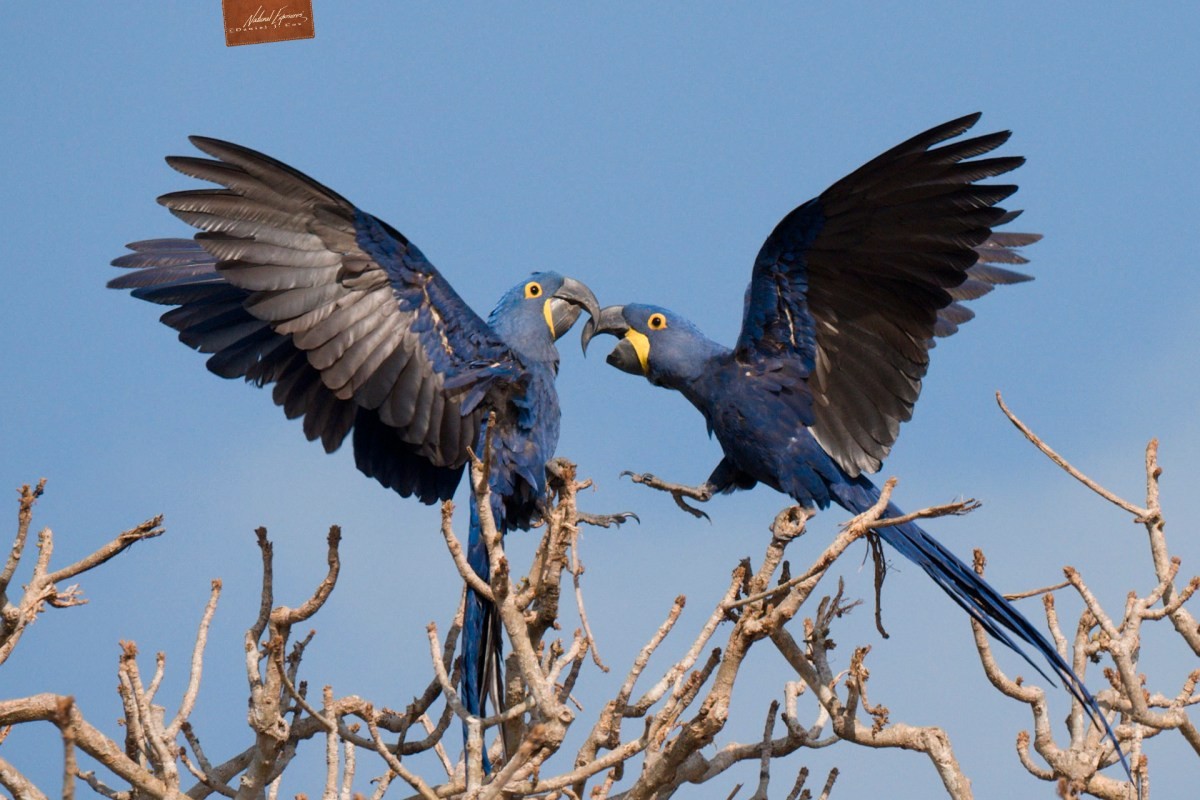
With this blog post, I wanted to share some of my photos of these glorious animals. Along with my pictures, I requested that one of our guides, Bruno Damiani, provide some written context. Below are his words describing this unique bird species.
Bruno Damiani, South American Naturalist
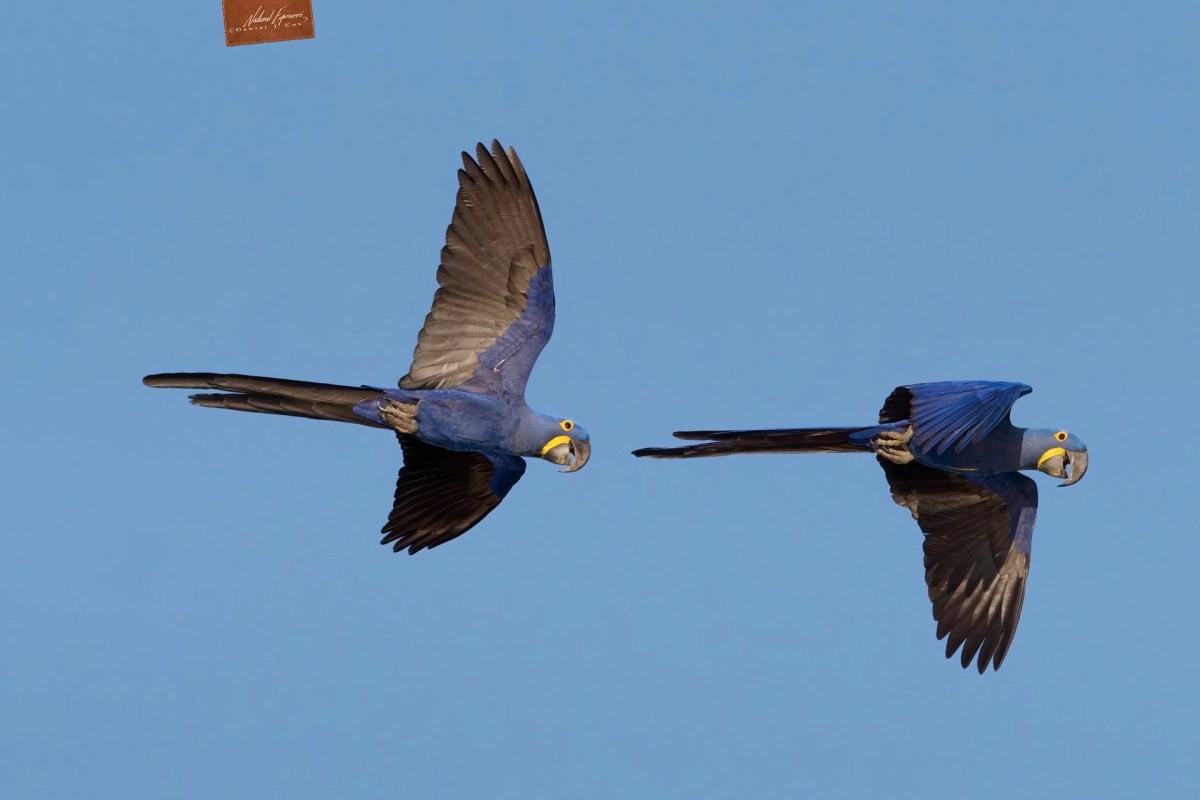
Majestic in flight and unmistakable with its cobalt-blue plumage that gleams under the sun, the Hyacinth Macaw is the largest parrot in the world, reaching up to one meter in length and more than one and a half meters in wingspan.
Hyacinth Macaw Population
Today, about 70% of its global population is found in the Pantanal, 20% in the Cerrado, and only 10% in the southern Amazon, with small groups surviving in Bolivia and Paraguay. In total, just 6,500 to 7,000 individuals remain — little more than half the number recorded fifty years ago.
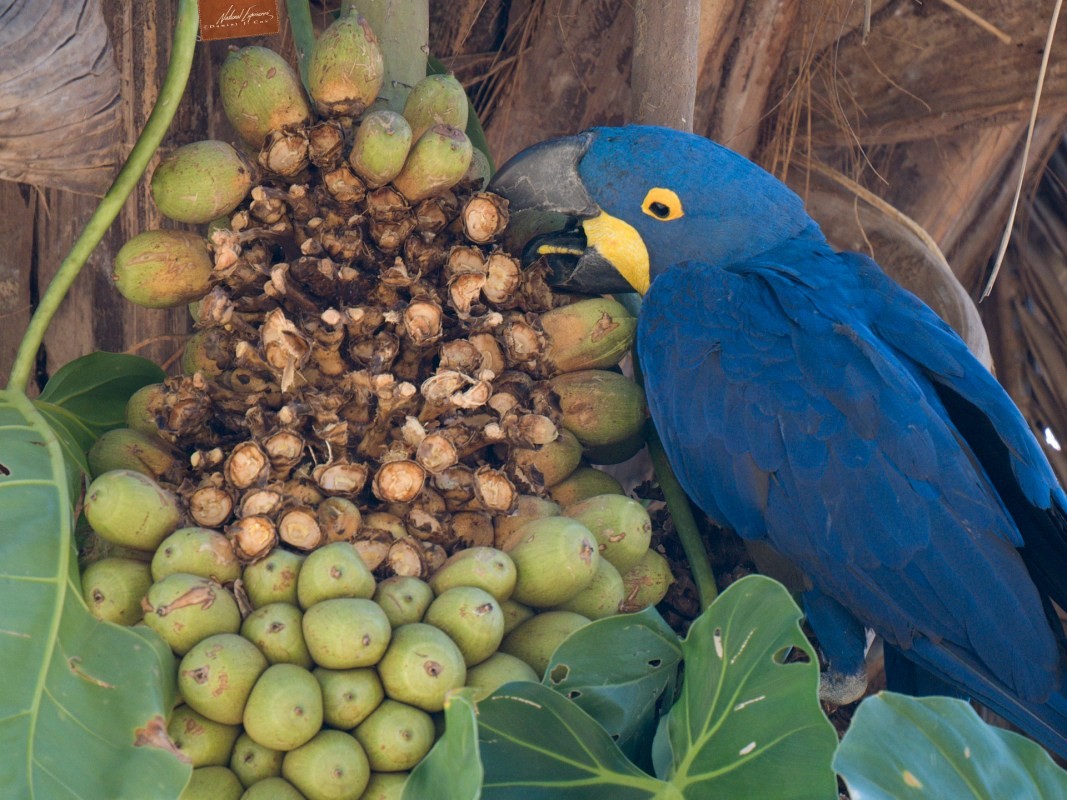
Habitat and Diet
Its survival is tightly bound to palm groves: nearly 95% of its diet comes from the extremely hard nuts of acuri (Attalea phalerata) and bocaiuva (Acrocomia totai) palms, which few other animals can crack.
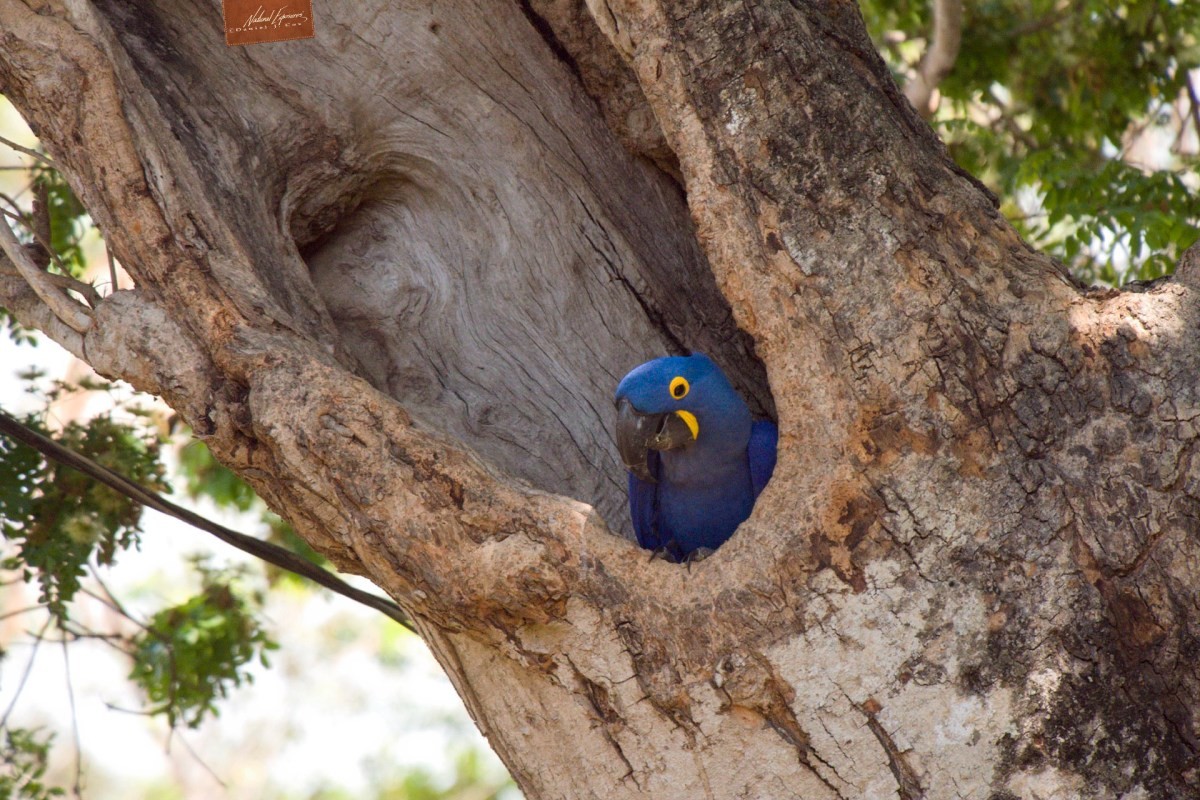
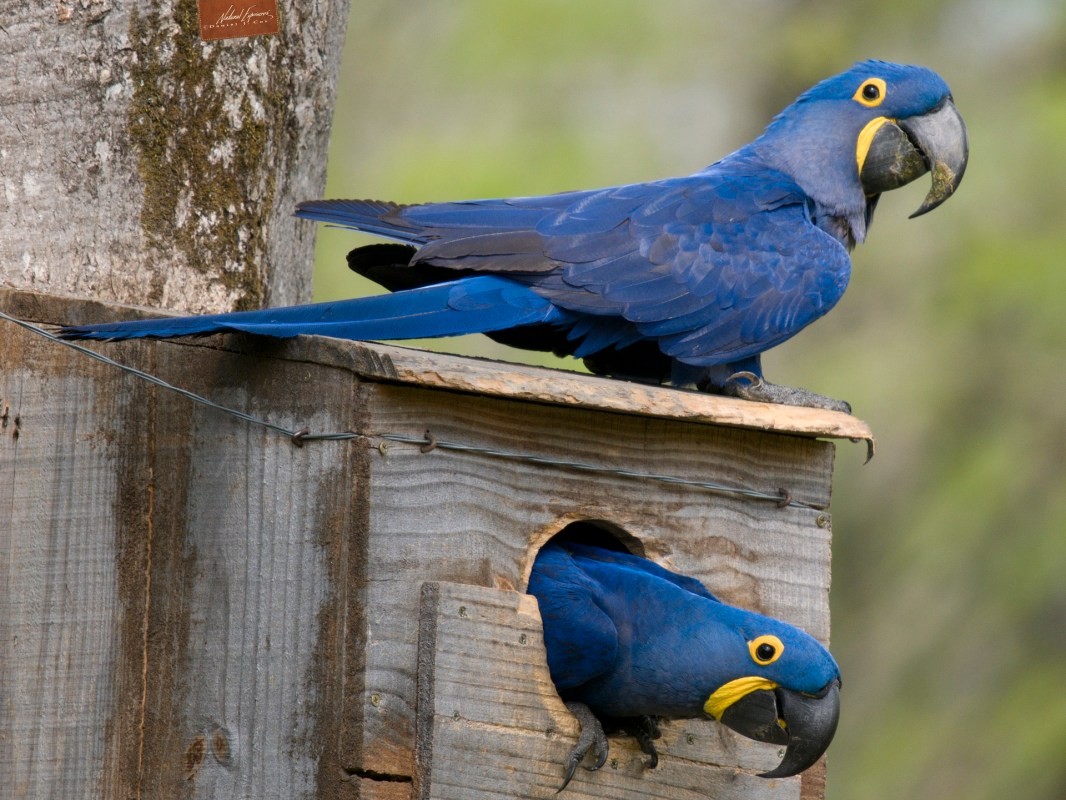
This rare feeding habit, combined with the scarcity of suitable nesting sites — only about 5% of large old-growth trees provide cavities deep enough for their nests — confines the species to highly specific microhabitats and makes it extremely vulnerable to habitat loss.
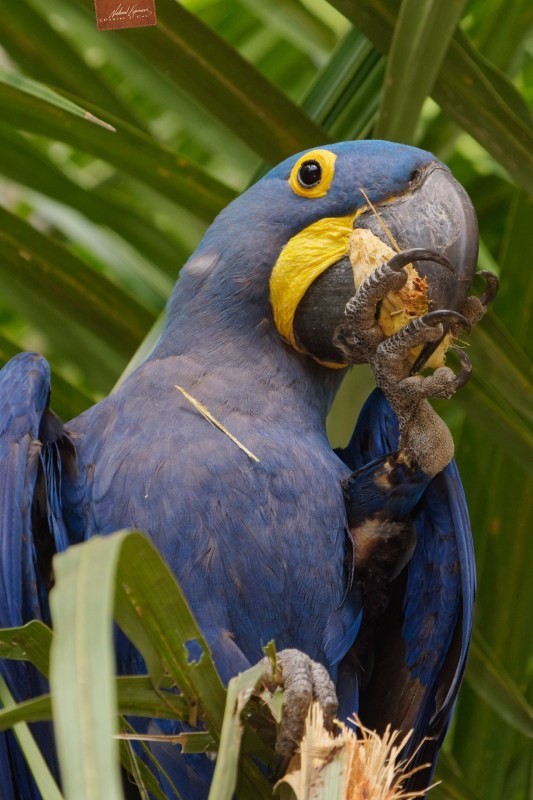
Behavior
Yet, despite living in such a fragile world, the Hyacinth Macaw is a symbol of vitality and intelligence. They live in lifelong monogamous pairs and, even as adults, engage in playful behaviors. Behavior such as acrobatic flights, stick manipulation, and social games that strengthen bonds within the flock.
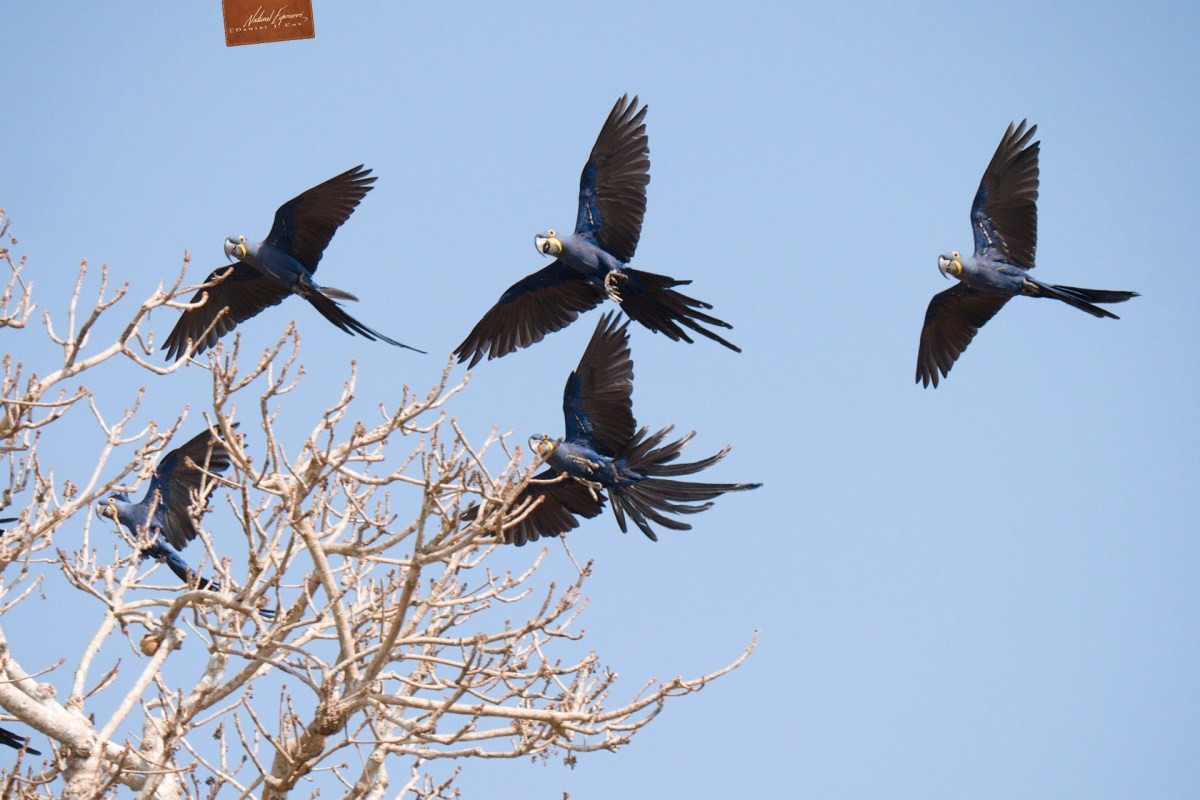
Chicks depend heavily on their parents for months, not only for food but also to master flying, recognize safe areas, and memorize the palm-rich territories. All these things are taken in to ensure their survival once they leave the nest.
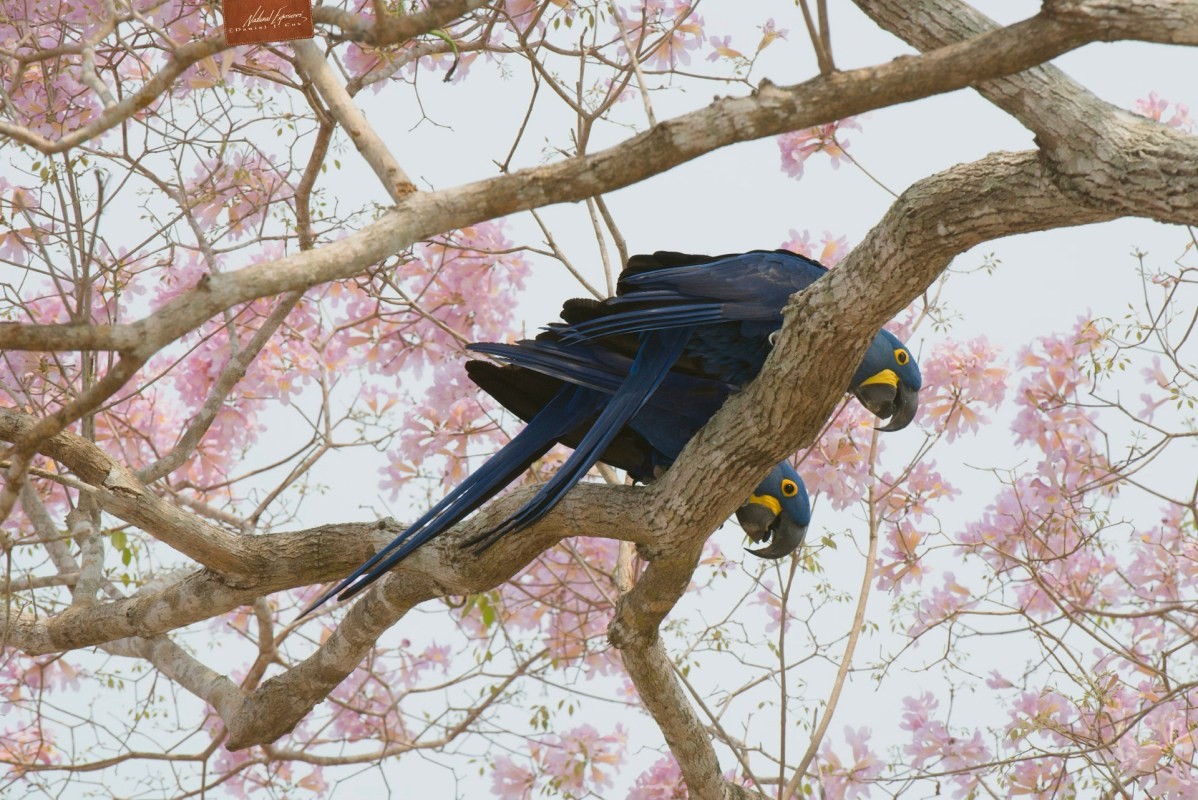
Without this critical learning period, their chances of thriving in the wild would drop dramatically. With a lifespan that can exceed 40 years in the wild, each bird becomes a witness to decades of environmental change.
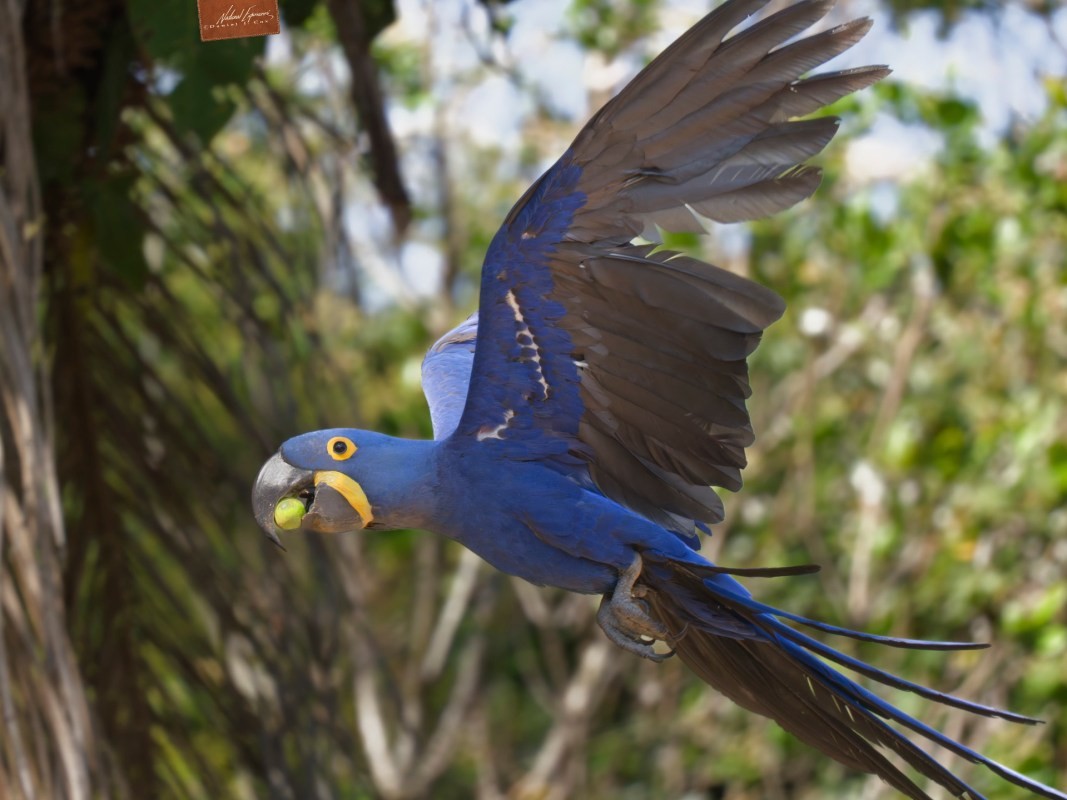
Classified as “Vulnerable” by the IUCN, the species faces threats from deforestation, wildfires, and the loss of centuries-old nesting trees. Still, conservation efforts in the Pantanal are showing success: nest protection and palm restoration programs have boosted local populations by up to 15% over the past two decades.
A clear reminder that when science and local communities work together, even the largest and rarest of macaws can continue to brighten the skies of South America.