
Shooting the New Leica Lumix 12mm F/1.4
This past February when I visited the Panasonic headquarters in Osaka, Japan, I spent time with engineers discussing many ideas and features for upcoming cameras. On the meeting room table were a few things I can’t discuss, but one item that’s now been announced is the new Leica Lumix 12mm F/1.4 lens.

The lens development team with a picture given to each of them shot with the new Leica 100-400mm zoom (which I’m holding) attached to a GH4.
When one of my hosts handed this lens to me, it was obvious it was part of the ongoing pro series of optics made with premium glass, metal housing, and the now common manual aperture ring that signifies Leica quality. I immediately asked, “What’s this?,” and as I rolled it over from one palm to the next, the orangish colored 12 came into view. Finally, a truly fast wide angle in my favorite range of 24mm, I thought to myself.
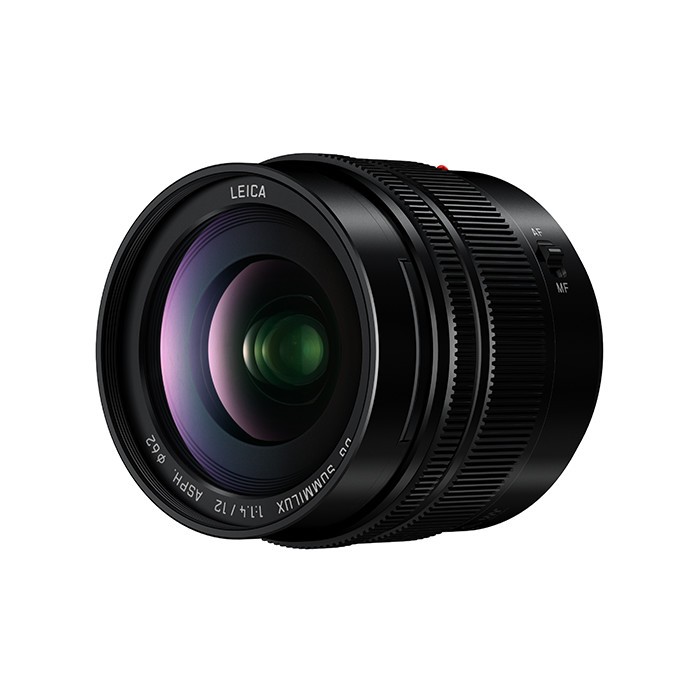
The new Lumix/Leica Summilux 12mm F/1.4 lens
That was was about five months ago and I’m happy to announce that it’s now on the pre-order list at all Panasonic Lumix dealers. About a month ago, my contacts at Panasonic were nice enough to send one to me and I’ve been shooting it extensively,
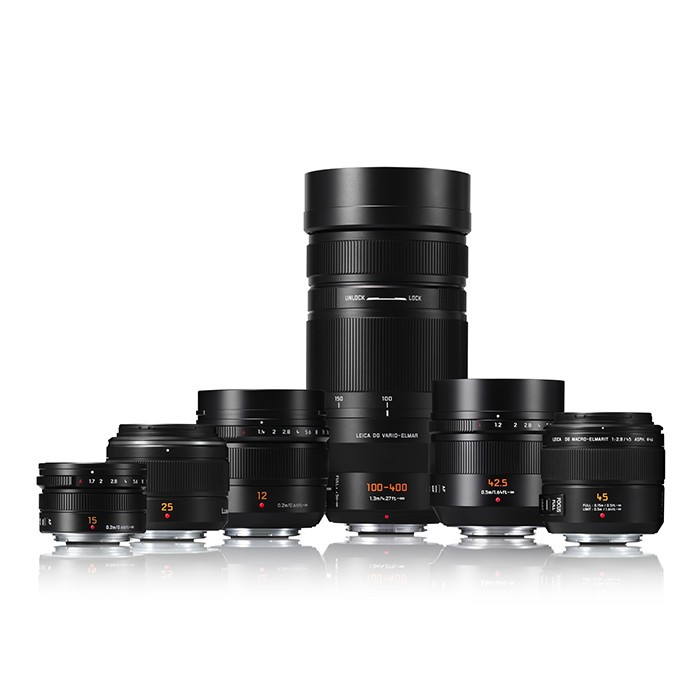
The ever growing Leica lenses for the Micro Four Thirds Lumix and Olympus cameras.
mainly on my recent Scotland-Ireland 2016 photo tours. It’s been a great four weeks with lots of opportunities to give it a lengthy field test.

Edinburgh Castle on the ridge above the beautiful city of Edinburgh, Scotland.
As always, what I’m about to write relates to my real world experiences. I seldom do extensive lab oriented reviews since there are so many other truly qualified proper scientific labs that are in business to do an official job. My tests are from an average user’s perspective and hopefully can give an idea of what the serious pro/enthusiast can expect. I used the new lens mostly attached to my Lumix GX8 but it was also used on a GH4. Both worked extremely well, but the GX8 had the added advantage of in-camera 5 Axis Image Stabilization. Unfortunately, the new lens does not have IS built in.
General Look and Feel
Like all the Leica lenses being built for Lumix cameras, the new 12mm feels extremely solid. It’s all metal and is sealed from dust and splashed water when used with the proper camera such as a GX8. The front lens element is 62mm which is quite large when compared to the Olympus version of the 12mm F/2 lens. The Olympus is tiny in comparison, but then it’s one full stop slower in light gathering capabilities. I find it amazing how much larger a lens becomes with just one stop of additional light it lets in.
I’m going to describe the lens starting from the front and moving back toward the camera.
On the very front of the lens is a metal, twist on with a click, lens shade that feels extremely solid. It’s not long, but it’s by far the best feeling lens shade Lumix has offered in the twist on variety. I have several other lenses that have lens shades that have a similar design but all are plastic. How they figured out how to do metal with a solid click and without a lock of any kind seems like magic.

This image of whiskey in Edinburgh, Scotland shows the very limited depth of field when shot at F/1.4.
Next is the manual aperture ring. Like the 15mm F/1.7 and the 42.5mm F/1.2, the 12mm aperture ring is silky smooth with solid feeling clicks in 1/3 stop increments. Clicking from one stop to the next exudes pure quality. Spin the ring all the way to the left, and the lens is set to A for Auto, which is where I place it so I can use the cameras front dial for Aperture control. The

Adding a frame to the foreground is one of my favorite techniques when shooting wide angle lenses. This image as shot handheld at 1/40th of a second at F/10 with the Lumix GX8, ISO 400.
manual Aperture ring is something many people like but I personally prefer using the camera’s front dial. To each their own; either way, it’s an option that is nice for those who want it and virtually invisible for those, like myself, who don’t have any need for it. The one issue I have with this ring is it’s lack of a lock for when it’s placed in the A (Auto) mode. Since I don’t use it, I

The star burst effect with this lens it spectacular. Lumix GX8, ISO 200
often find it’s been knocked from the A position which then takes my camera out of the Program Mode and into Aperture Priority. To eliminate this problem on this lens as well as my 15mm and 42.5mm Leica lenses, I take a very small piece of black gaffers tape which I fix to the bottom of the aperture ring and lens barrel on the underside of the lens. This holds the Aperture ring firmly in the A position and I’m free to forget about it.

Fading colors on the hull of a depleted old boat on the Isle of Skye in Scotland. Lumix GX8, ISO 200
Just beyond the Aperture ring is the manual focus ring. Like all the Leica lenses I’ve mentioned above, the manual focus on this lens is as smooth and easy to use as anything I’ve ever tried. Once again, it’s a nice feature for those that want manual control

An extremely full stream on the Isle of Mull topped off by the heavy rains we had for a couple of days. Lumix GX8, ISO 100
but I have to say I virtually never use manual focus anymore. It’s so easy to use the touch pad AF setting on the back of the LCD, and the AF is generally very accurate that seldom do I ever set the camera to manual focus. Once again, it’s a tool for those that prefer focusing themselves and out of site for those who don’t.
Image Quality
Without a doubt this is a very sharp lens with beautiful bokeh (out of of focus areas), exceptional detail, and gorgeous colors. Being a very fast F/1.4 helps when you might want to have the background go very soft and out of focus. All Micro Four Thirds cameras and lenses have more depth of field than let’s say traditional lenses on a full frame traditional DSLR. Many who prefer

Beautiful depth of field from front to back shows the rock wall surrounding this beautiful home on the Isle of Skye in Scotland. GX8 ISO, 200
the much larger, heavier, and substantially more costly full frame systems from Nikon, Canon, and Sony often argue that MFT lenses and cameras have too much depth of field. I could not disagree more. Personally, I’ve never had any trouble getting my photos “out of focus.” I’ve always found it difficult to get my pictures “in focus,” so the slightly better depth of field of MFT has always been beneficial. If I do really want to blow the background out of focus I’ll use a longer lens.
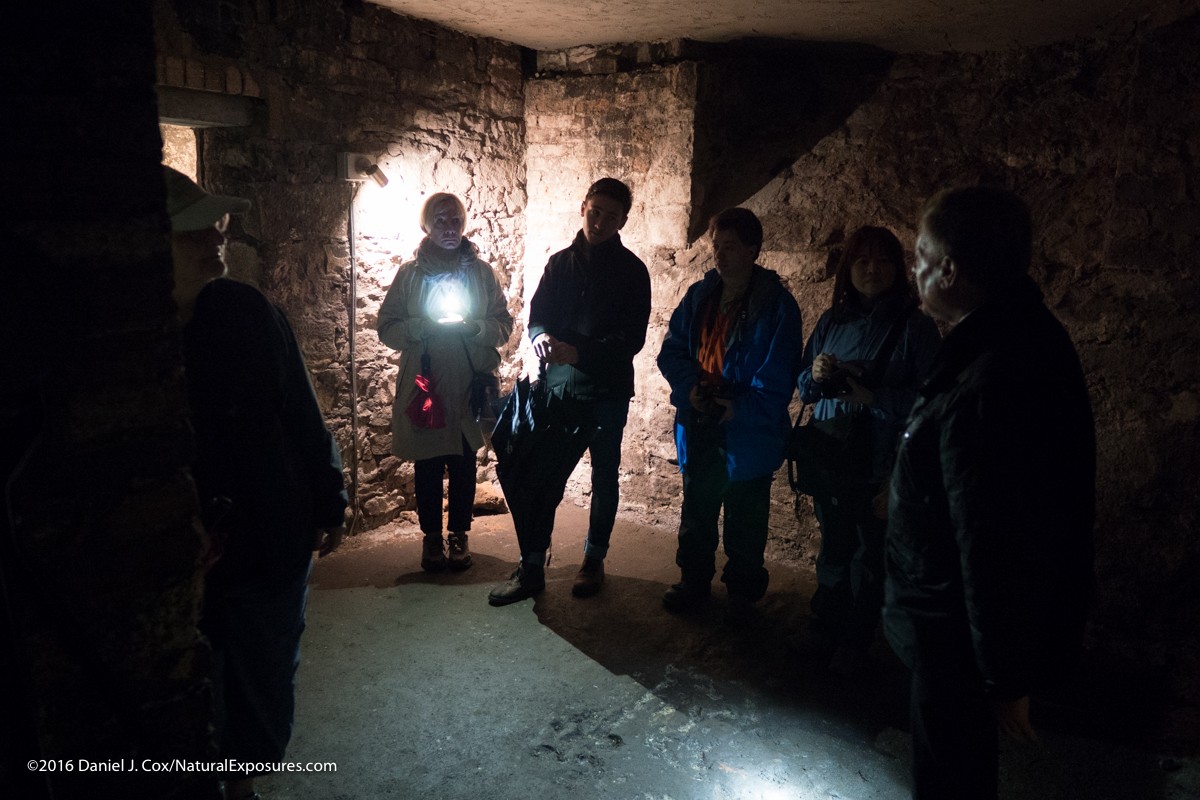
Our Explorers on a tour of the underground tunnels in Edinburgh. Typically a bright light like the flashlight in this photo would create flair in a lens that has issues. but as you see there is no problem in this situation. GX8, 12mm F/1.4, ISO 3200
One area of concern is lens flare. Because it has such a large front element, as well as the other pieces of glass within its barrel, light is easily reflected from one large glass element to another. Lumix/Leica has done a descent job with coatings to minimize
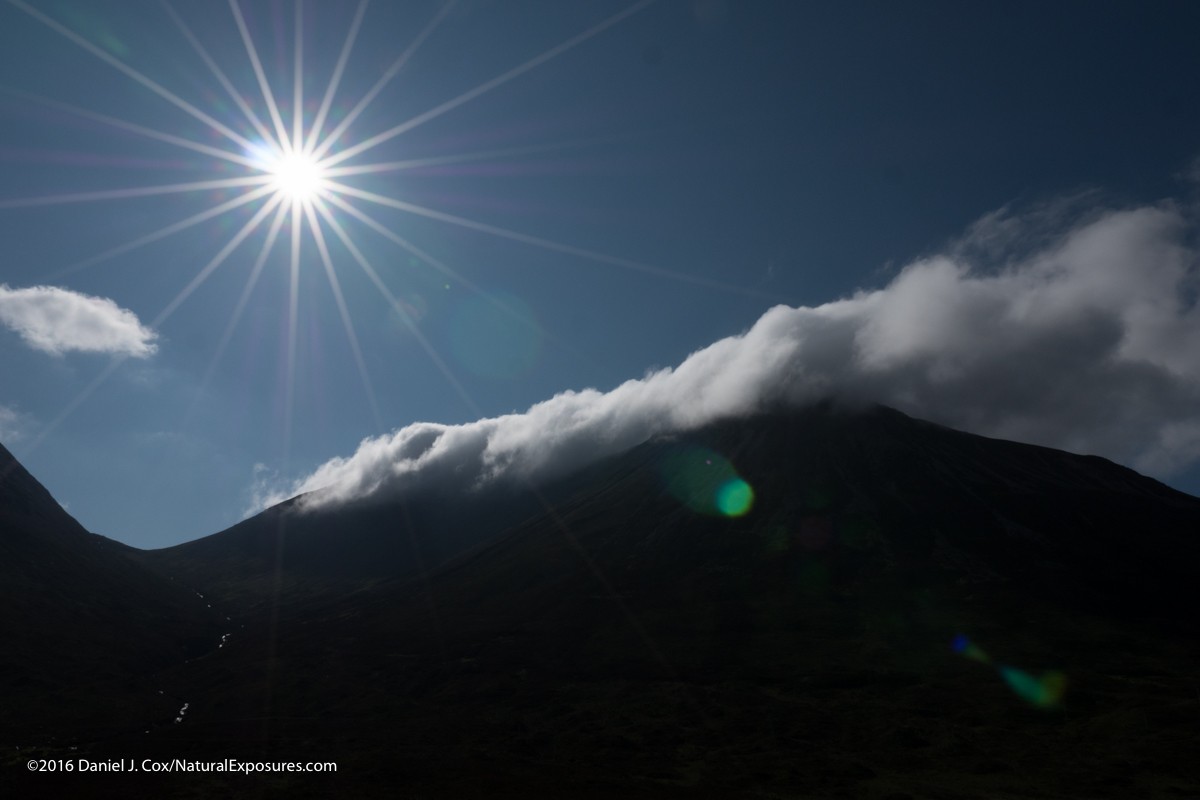
Shooting directly into the sun shows fairly serious lens flare. This image was shot at F/16 which may be part of the problem. The image above in the tunnel was shot wide open.
flare when shooting directly into bright lights, but I do feel flair in Lumix/Leica lenses is something Panasonic has to tackle in a much more aggressive manner. One of my absolute favorite lenses used to be my Nikkor 24mm F/2, and I used it to shoot scenes

Less flare in this shot at F/6.3. I definitely need to do some additional tests on flare alone to see what’s the best aperture to shoot at for the least amount of lens flare.
with the sun as a major element. With my old Nikkor that I originally purchased in 1981, I could eliminate all flare from this lens by stopping it down to F/8 which gave me a beautiful starburst effect. Unfortunately, I’ve not been able to replicate that technique with the new Leica 12mm F/1.4.

City lights on the streets of Galway, Ireland. Handheld Lumix GX8, 12mm F/1.4, ISO 2000
Where this lens is really going to shine is photographing night scenes, and in particular night skies. This is really why I bought this lens, along with its ability to shoot in much lower light than I’ve been able to do with other optics. As many of you know who

An underground waterfall in Aillwee Cave. Image was taken handheld with the Lumix GX8 at 1/4 of a second at F/1.4 ISO 1600.
read this blog, low light photography is one of the downsides to Micro Four Thirds cameras. MFT technology just does not have the low light capabilities of our full frame counterparts. I honestly believe it will come but until sensor technology changes, we have to get more light into our cameras by way of faster lenses and the 12mm Leica Summilux F/1.4 is one way to do this. Unfortunately I haven’t had a chance to photograph the night skies yet but will be doing that in the not too distant future.
Cost
With such high quality glass, weather sealing, and fabulous metal build, the new Leica Summilux 12mm F/1.4 is not cheap. Some might even suggest it’s fairly expensive. But once again I have to refer back to my Nikon system I shot for so many years to put it into perspective. Nikon also makes a fabulous 24mm F/1.4 lens. I actually thought about buying one in the past year but I just didn’t want to put the cash out and then carry it to boot. For the Nikkor 24mm F/1.4 you’ll be paying just a few dollars short of $2000US. The new Leica Summilux is listed at $1299US. As far as weight goes, the Nikkor comes in at 1.36 pounds; the new Leica Summilux is 11.82 ounces. Obviously a big difference on price and weight.
Conclusion
Overall, I’m very impressed with this new lens. It’s a great move on Panasonic’s part to continue working with Leica to bring Micro Four Thirds users the best optics possible for our smaller MFT sensors. I love the amazing details that are easily seen from the center of the lens all the way to the extreme corners, even when shot wide open. Its build feels as robust as any lens I’ve ever handled. As much as I love this new wide angle option we’ve been given, it really is a specialty lens for most photographers. The Lumix Vario 12-35mm F/2.8 also covers the 24mm range. Having a zoom can be a big advantage, especially one as sharp as the 12-35mm Vario. But if you want to shoot the Milky Way or any other scenes after the sun has gone down, this is by far the best lens we have for Micro Four Thirds users. How lucky we are to have so many great lens options in the short time since Micro Four Thirds came on the scene. Thank you Panasonic for your continued development of truly professional optics that are smaller, lighter, and less costly than the traditional DSLR lenses of the past.
Full size JEPG’s available for download for review purposes only.
Password: leica12mm
These images are straight from the RAW file with no sharpening or processing of any kind.