

A recent blog post by the Phoblographer titled SMALL SENSOR CAMERAS SUCK; IT’S TIME TO BE REAL HERE was truly off-base in its critique of small sensor cameras in general and the OM System specifically. It’s obvious these folks somehow missed the OM-1’s industry-leading technology. In fairness to Chris Gampat, I’m not certain he was trying to be critical in a negative way or simply pointing out what he felt could be improvements the manufacturers aren’t giving their less expensive camera line.
Either way, his comment “OM System is often behind all the other manufacturers. If it’s not with image noise, it’s the fact that they’ve been using a 20MP imaging sensor for almost a decade now. Their autofocus has also lagged behind many others out there.” Much of this comment is simply not true, with the exception of the sensor size. But his broad, overreaching generalization doesn’t stand up in my everyday use of the Olympus OM-1.
21MP For Almost Ten Years Is True
I can’t argue with the claim of OM System using a 21MP sensor, but I’ve not found it to be a problem. Several top-of-the-line full-frame cameras aren’t using sensors much larger than 21MP either. Examples include the Canon R3 with a sensor size of 26MP. Then there’s the Sony A7 at 24MP. In short, other camera manufacturers obviously understand that not all photographers want monster MP sensors. The files take up huge amounts of hard drive space and aren’t needed for what most people use them for, Facebook and Instagram!
But what about large prints? Not an issue. I’ve printed images from my Lumix and Olympus MFT bodies as large as 80 inches on the long side. With software available today, such as Topaz Photo AI, 21MP has been more than acceptable. And yes, I do crop now and again if needed. You would be amazed at what you can accomplish with a 21MP sensor and astonishingly sharp optics such as the Olympus 150-400mm F/4.5 lens. In short, the critique of the OM-1’s 21 MP sensor is a nonissue.
Micro Four Thirds Pushes The Envelope With New Features
Another comment Chris makes is, “All the best features end up with full-frame cameras first.” My goodness, I have no idea how he can think this. Let’s break down the many unheard of features Micro Four Thirds has pioneered.
MFT Lens and Camera IS First
Although Panasonic invented image stabilization in 1980, Micro Four Thirds brought it to the masses. Olympus’ first Micro Four-Thirds camera with image stabilization was the Olympus E-510. The IS technology in that camera was included in their MFT line and eventually improved with Sync IS, where lens and camera IS work in tandem.
Panasonic actually beat Olympus to Sync IS by inventing Dual IS in the Lumix GX8. Getting the lens and camera to work together was a huge improvement in overall image stabilization and it was all perfected by Olympus and Panasonic. Nobody in the full-frame world was even thinking about Dual/Sync IS before the folks in the Micro Four Thirds camp brought it to market. And today the new OM-1 Mark ll boasts a staggering 8.5 stops of effective IS, much more than any full-frame camera is making claims to.
Starry Sky AF
Starry Sky AF is a game-changer for those who enjoy night sky photography. Gone are the days when I used to simply set my lens to infinity, dial in the proper exposure, point it at the night sky, and start shooting. Those were the days before AF lenses didn’t have a true and easy-to-set infinity position.
Before Starry Sky AF I had a few options for getting a lens set to infinity. One way to do it was to set up for the shot before the sunset. Another would be to have a powerful flashlight and hopefully trees far enough out to reach infinity. Another would be to meticulously enlarge the image on the back of my LCD to check the focus of the stars. All of these methods were time-consuming and not always effective.

Then came Starry Sky AF. In fairness, Panasonic was the first to introduce this feature in what they called Starlight AF. However, I could never get it to work consistently with my Lumix cameras. It was always hit or miss. Imagine the disappointment when I would come in from shooting in temps of -30F, check my images of the Auroroas, and find they were not critically sharp. That’s not an issue with OM-1’s Starry Sky AF. The OM-1 acquires the stars, locks on, and succeeds every time I push the AF-On button. It is so liberating to happily change compositions and know your photos are in sharp focus with the Northern Lights blazing above. Not a feature on any of the full-frame cameras that I know of.
Focus Stacking in MFT Cameras
I tried to find exactly who invented in-camera focus stacking first. And I have to say it wasn’t easy. However, I had never heard of focus stacking until I saw it from Olympus. I searched on the internet and found the earliest date of November 2015, discussing Olympus’ focus stacking within a group on Flickr. I found nothing that early from any of the full-frame camera groups.
High-Resolution 80MP Files
From what I can find on the internet, it was Olympus that brought Pixel Shift into the realm of possibilities. It all began with the Olympus OM-D E-M1 Mark II, where they harnessed the sensor stabilization to move in such a way that recorded a combination of frames and merged them together into a much larger RAW file. It makes sense that they were the first to this game due to their leadership position with sensor stabilization. Another first. With the OM-1, the 22MP sensor is turned into what is effectively an 80MP sensor. All the full-frame companies are now doing the same. Once again, the technology started with Micro Fourth Thirds. It didn’t start with Sony, Not Nikon or Canon.
Professional Moisture and Dust Sealing
Olympus has led the way in professional-grade moisture and water-sealing for over a decade. Now, with the OM-1 and the new OM-1 Mark ll, they are taking it even further. Both these cameras are rated to an incredible IP53 rating. It’s the world’s first camera system to feature such impressive capabilities.
Did I mention that the OM-1 is the world’s FIRST for this type of sealing? Meaning no full-frame camera comes even close. Let me repeat. No full-frame comes even close when it comes to this type of water sealing. It seems others aren’t aware of this very much-appreciated feature.
In-camera ND Filters
ANOTHER FIRST for any mirrorless camera company is in-camera ND filters. Being able to turn these off and on at will is another feature nobody else is doing. At least not in the mirrorless stills world. I no longer carry any ND filters for still photography. Unfortunately, that’s not the case for video.

NDs are still required for video, but I’m hopeful OM System will eventually eliminate that issue as well. Using the in-camera ND filters allows me to get beautiful silky water images, moving clouds, and the ability to slow the shutter down when needed. Did I mention this was another first for any camera that came from a small sensor camera company?
Pro Capture Anybody?
Olympus gave us Pro Capture long ago. Many people ask, what is Pro Capture? It’s a feature where the camera starts collecting pictures and saving them to the buffer BEFORE the button is fully pushed. The advantage is that you have photos in the buffer the camera saves before the action takes place. For example, if a bird is sitting on a branch and you’re hoping to get it in flight as it leaves, Pro Capture is your answer.
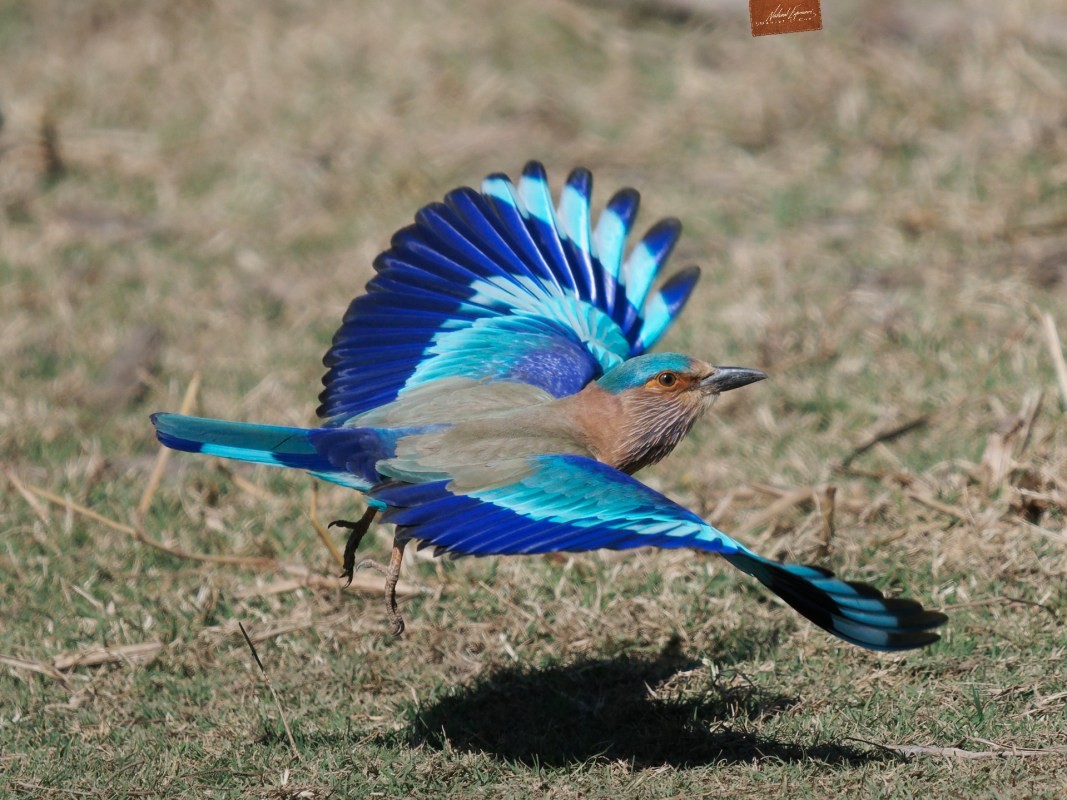
As you place and hold the camera on the subject, pushing the shutter button halfway to activate Pro Capture, it starts recording what you see in the viewfinder. As the bird leaps into the air, you try your best to capture the leap. A very difficult task for any photographer. But with Pro Capture, the camera has been saving a dozen or so frames before the bird took off. So now you have the exact moment the action started.

Add to that Pro Capture SH1, which shoots at up to 120FPS in S-AF, and Pro Capture SH2, which shoots up to 50FPS in C-AF, and you can understand the many advantages of action. All of this magic is collected in RAW format. Can anyone tell me how many full-frame cameras can do this? I know the Nikon Z9 and Z8 can do Pre Capture but Z9 was originally only capable in JPEG format. That might have changed. Even so, Olympus has had this feature for years and it has always been in full RAW mode. Trickle down from the full-frame cameras? I don’t think so. Another Micro Four Thirds first.
Live Composite
Live Composite is another first for OM System. It uses Computational AI to collect just the right amount of light for extended exposures. Live Composite allows the ability to expose the foreground, and then the camera keeps adding only the changing light from fireworks or other sources. You can watch this happen on the rear LCD and cut the exposure when the light equals your desired effect. Below is an amazing video of this feature in action.
So… No! Small Sensor Cameras Don’t Suck
So there you have it. I don’t think anyone can argue that Olympus is behind the curve regarding state-of-the-art features. Pro Capture in RAW, focus stacking, IP53 weather protection, Starry Sky AF, and the other tools I mentioned prove the fallacy in the comment, “Small Sensor Cameras Suck.” In fact, the unique features mentioned above and the size, price, and mobility of OM-1’s Industry Leading Technology keep me firmly committed to the MFT cause, particularly to OM System. In their blog post titled: It’s Time to Stop Being Elitist About Camera Sensor Sizes, you can also read another take on my argument favoring Micro Four Thirds on the Petapixel website.