

A couple of months ago a good friend and frequent Natural Exposures Photo Adventure traveler Leon Soriano introduced me to the amazing new Panasonic Lumix camera called the GF1. It’s part of the Micro Four Thirds system created by Panasonic and Olympus back in August 2008. It’s all a part of the quest to make still cameras smaller, as well as merge the world of still and video capture. I’ve been waiting for my favorite camera company, Nikon, to do something in the small point and shoot department similar to the GF1 but alas it hasn’t happened. So for the time being I’m using this new, spectacular little image capturing device. Take a look at our recent Africa video. All of the people scenes were shot with the GF1.
One of its main attractions is its size. It’s bigger than a point and shoot but 1/4 the size of my normal digital SLR’s. It shoots RAW files from a 12-megapixel chip. It takes an amazing range of lenses including 7-14mm, 14-45mm, 45-200mm, 20mm 1.7, and many more to come. Keep in mind that due to the 4:3 system you have to multiply all the lens ranges by two. So the 7-14 is actually a 14-28mm in 35mm SLR format terms. One of the most notable attributes is that Micro Four Thirds system lenses and bodies will all interchange with each other. What this means is if Olympus builds a better, faster super wide lens such as a 24mm F/2, I can buy that lens and put it on my Panasonic. If it’s a Micro Four Thirds lens it retains all the built-in lens functions such as AF, etc. If I have the Micro Four Thirds system from Olympus with a host of lenses and Panasonic comes out with an amazing new body that shoots stunning files in low light, I just buy the Olympus and all my Panasonic lenses are good to go. It’s a phenomenal way to keep the value in your camera system.
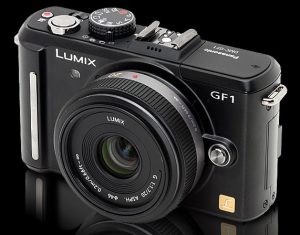 The other most used feature I’ve come to appreciate is the option of shooting HD video. Some users are disappointed in the fact it’s only 720p HD video, but for me that’s not an issue. I wouldn’t mind having 1080p, but for the majority of the projects I shoot 720p is plenty. Most of my video work is posted to the web, on computer screens and the like. Even on a large flat panel TV, 720p is still quite astounding. The GF1 retains its ability to autofocus even while shooting, unlike the recent digital SLR’s that have shown up on the market incorporating video into the bodies. I can’t say enough about this new camera format.
The one caveat to all of the above is the fact that Panasonic could use some pointers from the likes of Nikon when it comes to the buttons, dials, and extra doodads that all digital cameras must have. I’ve been shooting Nikons nearly my entire career, with the exception of a short six-month stint shooting both Nikon and Canon back in 1996. It was then that the superior ergonomics and handling of the Nikon system made me decide not to make a complete switch. I was tempted, but a fast-handling camera is as important as quick AF, superior files, etc. Panasonic needs a hand in developing this end of their camera line. Other than that it’s a superb still/video story telling machine that I’m using every single day. I love this camera.