

Just for the record this is a Guest Post. I like to get our Explorers involved on the Blog when possible. I feel like it’s a great way for real people to relate to real people. That might suggest us professional photographers are not the norm 🙂 I could go with that. No problem there. I’ve been accused of worse. So anyway, this evening I want to introduce to you two great folks that have done several trips with us, Mark and Cathy Pemberton. I’ll let Mark take it away with his Panasonic Lumix GH3 review first and then Cathy will follow up with a short evaluation of her experiences with the new camera.
Panasonic Lumix GH-3 Review-on Safari in South Africa.
By Mark Pemberton
 One of the strongest trends in photography equipment in the past 5 years has been the rise of high quality, interchangeable lens, mirrorless camera systems. In some ways this is not a new trend. After all, Point-and-shoot cameras have been around for a long time and they are mirrorless lens cameras. The difference is that the emphasis has shifted from small, convenient and simple to use to high quality, flexible, pro quality systems. The new generation of mirrorless systems feature larger sensors than the old point-and-shoots. This allows for both better quality images and superior low light performance. Early leaders in the field included the Sony Nex, Olympus and Panasonic lines.
Another exciting advancement is the development of the Micro Four Thirds lens system. This system offers a number of technical advantages that allow the camera’s size and weight to be reduced. It is also a universal standard lens mount system. That is, any manufacturer’s micro four thirds lens will fit and operate on any other manufacturer’s micro four thirds body.
In the past when I wanted to do wildlife photography I used either my Nikon D700 full frame camera or a D7000 APS body with my 200-400 mm f4.0 zoom lens. I almost always used this combination on a tripod or a bean bag for support. When I signed up to go on Dan’s 2013 South Africa trip I learned that the style of Land Rover used in the camps there did not really allow for either. I would be forced to handhold my camera for most of the time. I knew that the D7000 / 200-400 mm combination was too heavy to hand hold for 8 hours a day and started looking for alternatives.
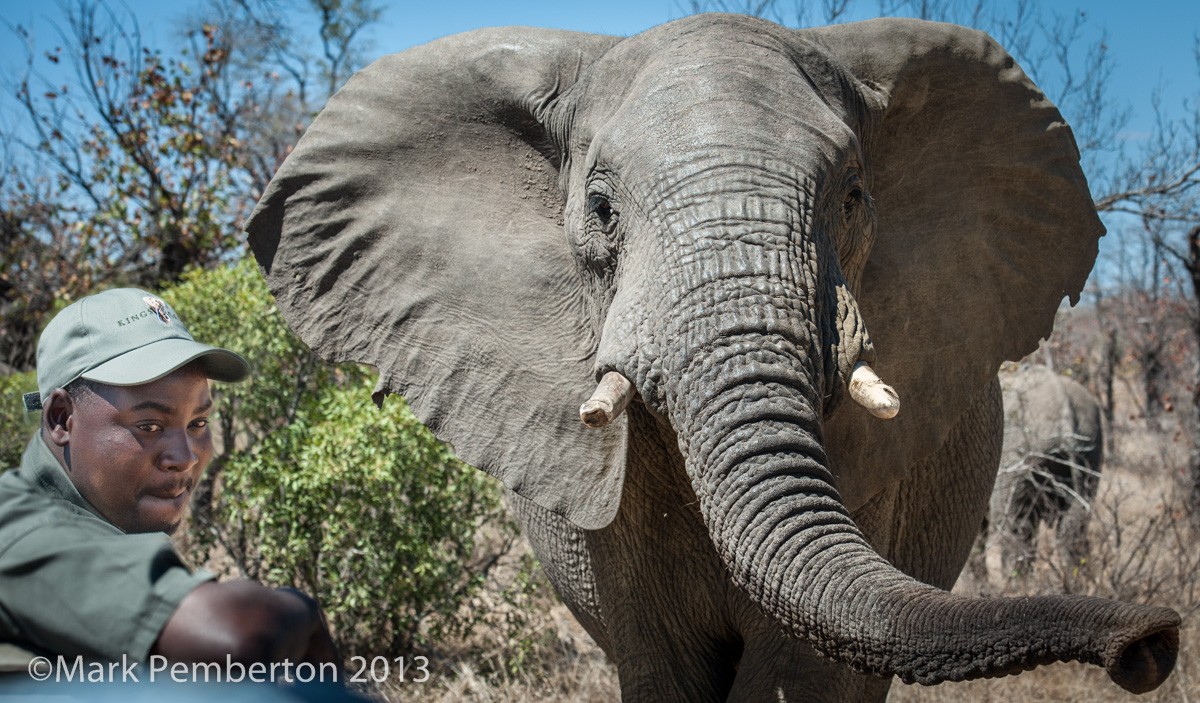
 Getting close with the 100-300 zoom.
Dan has been speaking highly for years about the Panasonic Lumix micro four thirds cameras. In 2012 Panasonic came out with the Lumix GH-3, a pro-sumer quality body featuring a Magnesium frame, dust and water sealing and many advanced features. Dan reported on his experiences using the camera during his 2013 Kenya trip in his blog published on January 3, 2013. Equipped with Panasonic’s 100-300 mm zoom lens this combination is the 35 mm equivalent of a 200-600 mm lens. And the best part is that the weight of the GH-3 system at 40.5 oz is about ¼ the weight vs the Nikon D7000 / 200-400 mm weight of 146 oz. That is a system that would be easy to handhold.
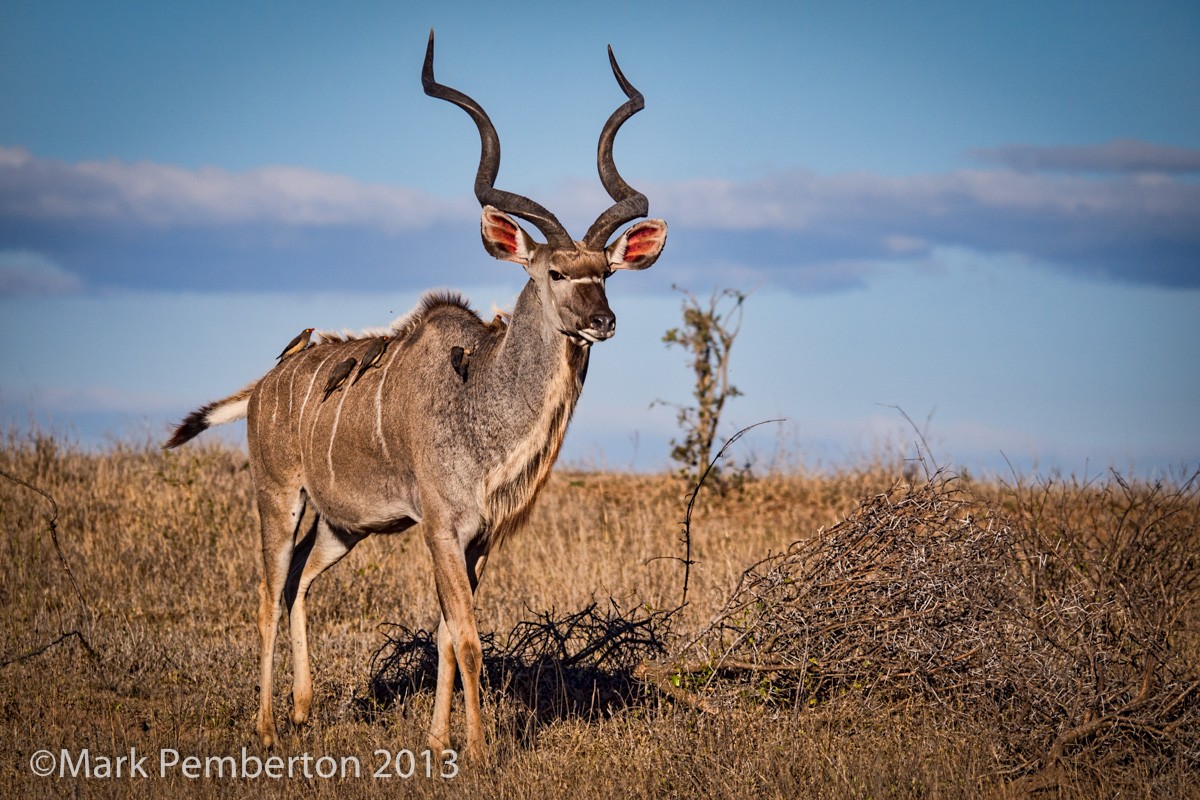
 South Africa had an amazing number of these beautiful Kudu’s.
My wife Cathy and I bought the Lumix system and put it through a series of preliminary tests. These tests were published in our blog on August 28th. The results that we obtained were very impressive and convinced us that we could leave our large, heavy lenses at home.
After 12 days of shooting out in the bush for 8 hours a day we returned home from South Africa and got our first real opportunity to examine our photos critically. And we were astonished at the quality. The images were bright and sharp. I could not see any significant difference between the images that we shot on this trip with the GH-3 and our previous trip to Kenya when I used the D7000 and the 200-400 mm lens. The following is an image that I shot in Malamala of a leopard creeping through the brush at 8:47 in the morning.
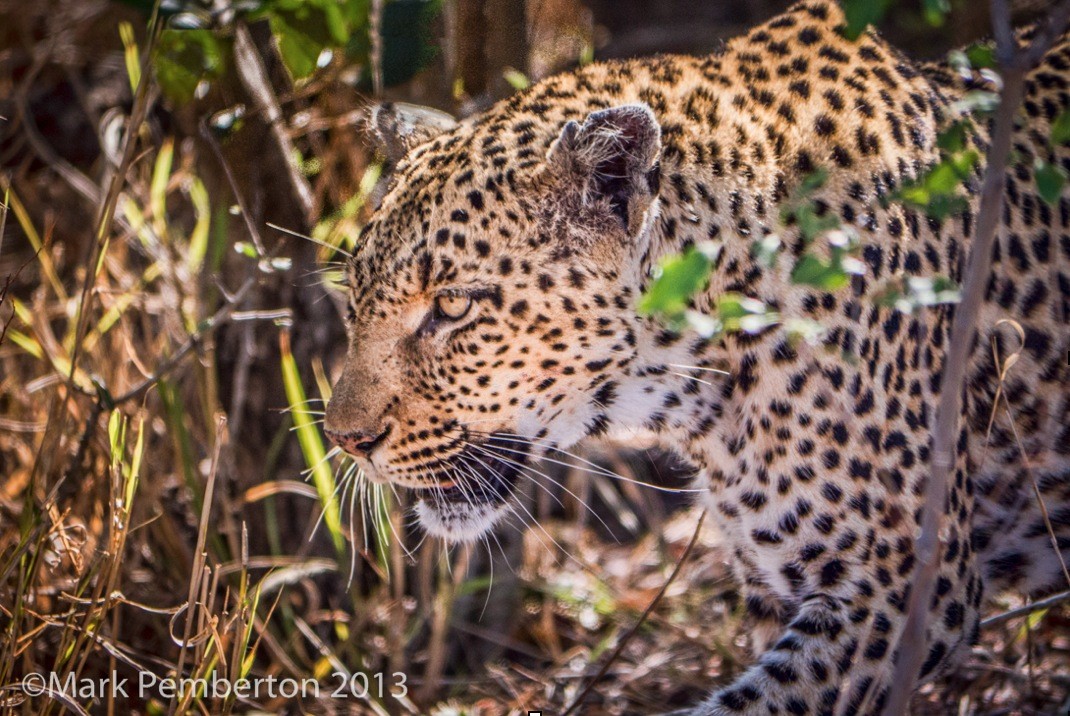
 The following is an image that I shot in Mala Mala of a leopard creeping through the brush at 8:47 in the morning.
I was also impressed by how well the GH-3 performed under low light conditions. We began our game drives each day before 6 am and our afternoon drive typically continued until dark. I found that the GH-3 gave perfectly acceptable images at ISO 1600. Even at 3200 the images were quite good with a little bit of noise adjustment in Lightroom. The following photograph, shot at 6:26 am, shows some lion cubs getting a drink. It was shot at ISO 6400!
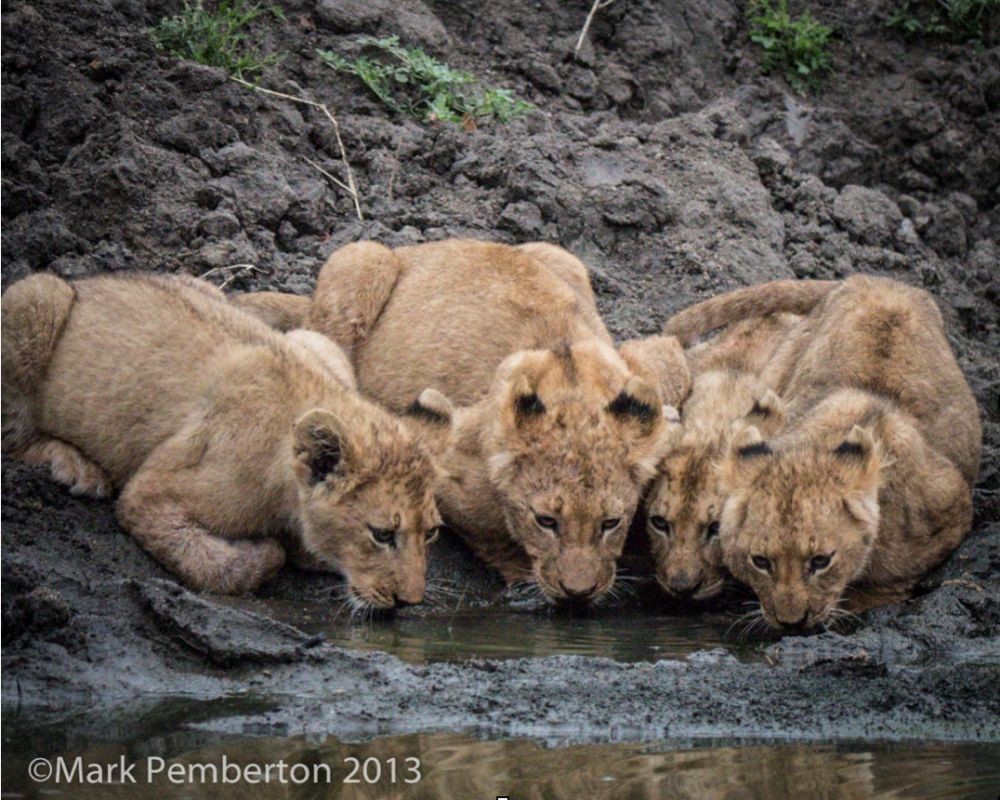
 The following photograph, shot at 6:26 am, shows some lion cubs getting a drink. It was shot at ISO 6400!
In general I found the GH-3 very easy to use. The button layout on the GH-3 to be very convenient and well designed. One of the biggest delights for me was the Electronic Viewfinder (EVF). The EVF provided a wealth of information that was well laid out, very bright and easy to read. The information displayed in the GH-3 is vastly superior to that in any of my Nikon DSLRs. The image display in the EVF, while very good, is not nearly as good or bright as the optical viewfinder in a DSLR. The contrast detection autofocus is very fast and accurate. I did, however, run into one situation where I tried to photograph Cape Town in the distance from Table Mountain, where haze and low contrast prevented the autofocus from locking on. And this leads to one of the major problems with the GH-3. Shooting stationary or slowly moving objects is no problem. However, trying to shoot rapidly moving objects is nearly impossible. When shooting in burst mode (3-6 fps) the image view to the EVF is blocked out as each image is processed and transferred to the buffer. Thus, your view of the subject is interrupted and a moving image is quickly lost after a few frames are shot. Until Panasonic finds a solution to this problem the GH-3 cannot be recommended for action photography, such as sports or birding.
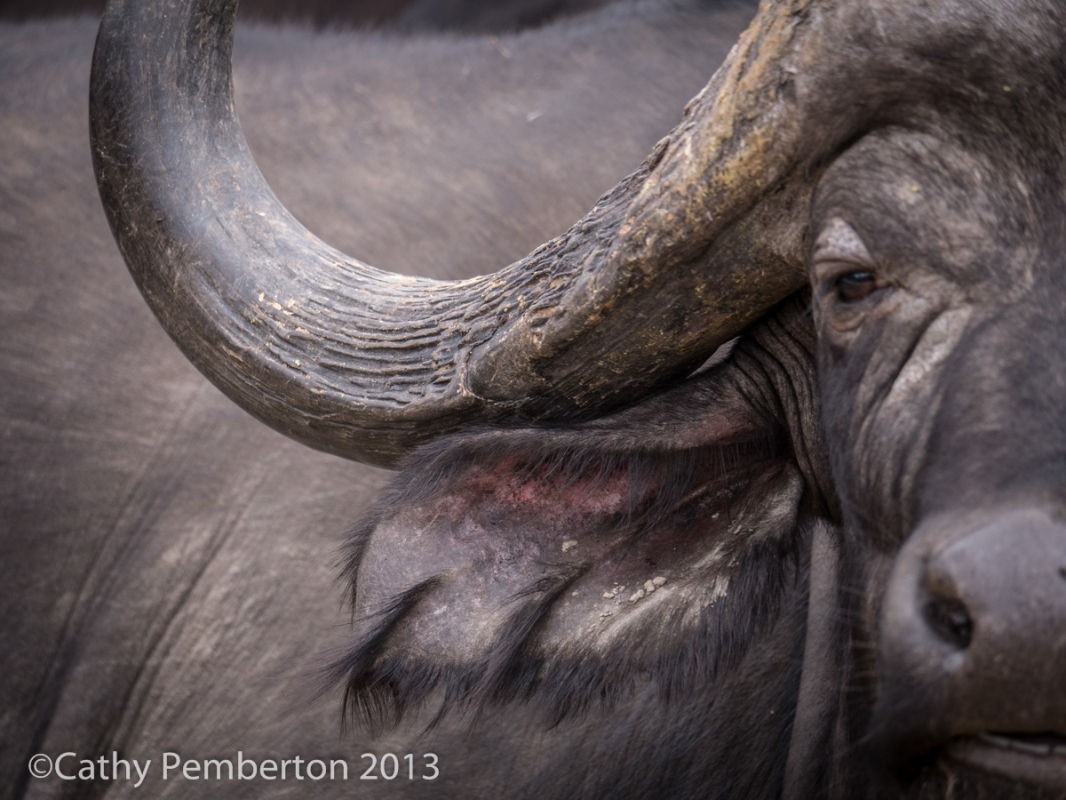
 Cathy’s terrific eye saw the shape and form of just a part of this buffalo and made a beautiful picture.
No review of the GH-3 would be complete without a discussion of its video capabilities. I won’t discuss this in detail since there are many excellent reviews of the GH-3’s video capabilities on the web. I will simply state that the video quality produced by this camera is stunning. An external microphone is essential, however.
[youtube]http://youtu.be/IbfbbSrrMJ4[/youtube]
We did experience a few problems over the course of the two weeks of shooting. I found it quite easy to bump some of the buttons and switches and accidentally change settings. This was especially true for the shutter speed setting, adjusted with the rear dial on the camera. I found on several occasions that I had accidentally rotated the dial with my thumb as I picked the camera up. This was somewhat annoying since I was shooting in shutter priority mode. In some cases we never did figure out how we accidentally changed settings.
This does point out one excellent feature of the GH-3, and that is the availability of Custom Modes. Using Custom Modes you can set all of the menu items and dials however you wish and then save those settings to one of five Custom Modes. (C1, C2, C3-1, C3-2, C3-3) By rotating the Mode dial to any of the Custom Mode positions, all of your programmed settings will be restored. When faced with rapidly moving action in the field this is a quick and easy way to assure that you have the camera setup the way you want.
Conclusion
The GH-3 is an easy to use camera that returns exceptional quality photographs and video. It also offers good low light capability. Its design makes it a good pro alternative in situations where weight and size may be a premium. When tested under the demanding conditions of a 2 week safari it did not disappoint. Unfortunately, the interruption of the image to the viewfinder during burst mode shooting makes the GH-3 unacceptable for rapid action photography. Otherwise it is a superior instrument.
See more of Mark and Cathy’s Fine Art Photography
A Complementary View
By Cathy Pemberton
We purchased the Panasonic GH-3 as a result of the type of vehicle we were going to ride in for our game drives in South Africa. Tripods and bean bags were not going to be an option. I knew that I would be unable to hand hold my large zoom lens but was reluctant and concerned about using a new camera, as it takes me quite a while to learn how to use a camera.
I only managed to use the GH-3 twice before the South Africa trip and the first couple days were very difficult as I had managed to change some of my custom settings without realizing it. To be honest, very early on in the trip I threatened to smash the camera into a million pieces with a baseball bat because I wasn’t comfortable using the camera and was extremely frustrated when I previewed many of my images as they were all very underexposed. These issues occurred at the very start of our trip and I was concerned that I would only have my Nikon with an 18-200mm lens to use, thereby preventing me from taking close-up photos of the wildlife. However, thanks to help from Dan and Mark, they were able to quickly identify and resolve my problems so that I could focus on capturing the best images possible.
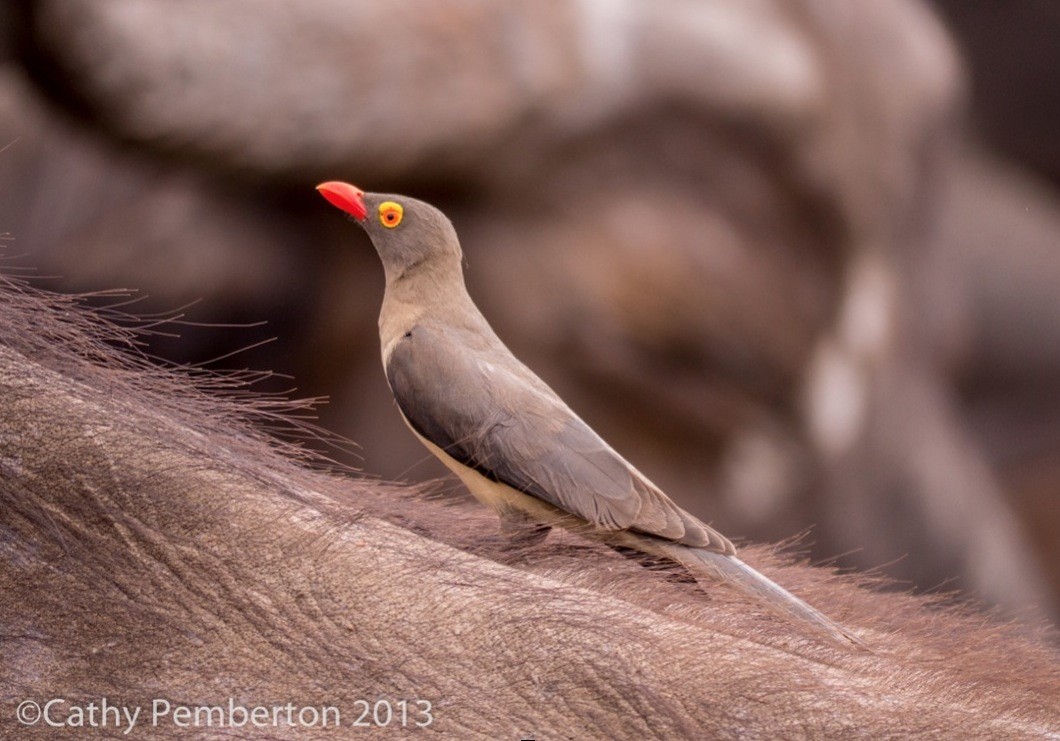
 Cathy gets close to a red-billed oxpecker with the 100-300mm zoom.
Throughout the trip I still ended up changing some of my settings but learned to identify the problems and fix them. The use of Custom Modes helped in this regard. My confidence grew slowly with each day. When we returned home, and I started reviewing the images, I was happy that we made the purchase. I got some really good images. Although the GH-3 isn’t my favorite camera yet (I love my Nikon D300s), it is definitely giving my Nikon a good fight. Now I find myself thinking more and more about using the GH-3 under certain conditions when planning for our future adventures.