

Update 5/26/2014
The Olympus OM-D E-M1 – A Very Short Review is in fact, very short and in all honesty barley a review at all. It’s really more of just an opinion piece and for good reason. I had a very hard time forcing myself to even use this camera after coming to grips with how painfully difficult it was to set up. I took it out in the streets of Havana, Cuba and shot it for three days, but I had to force myself to do so. Why?
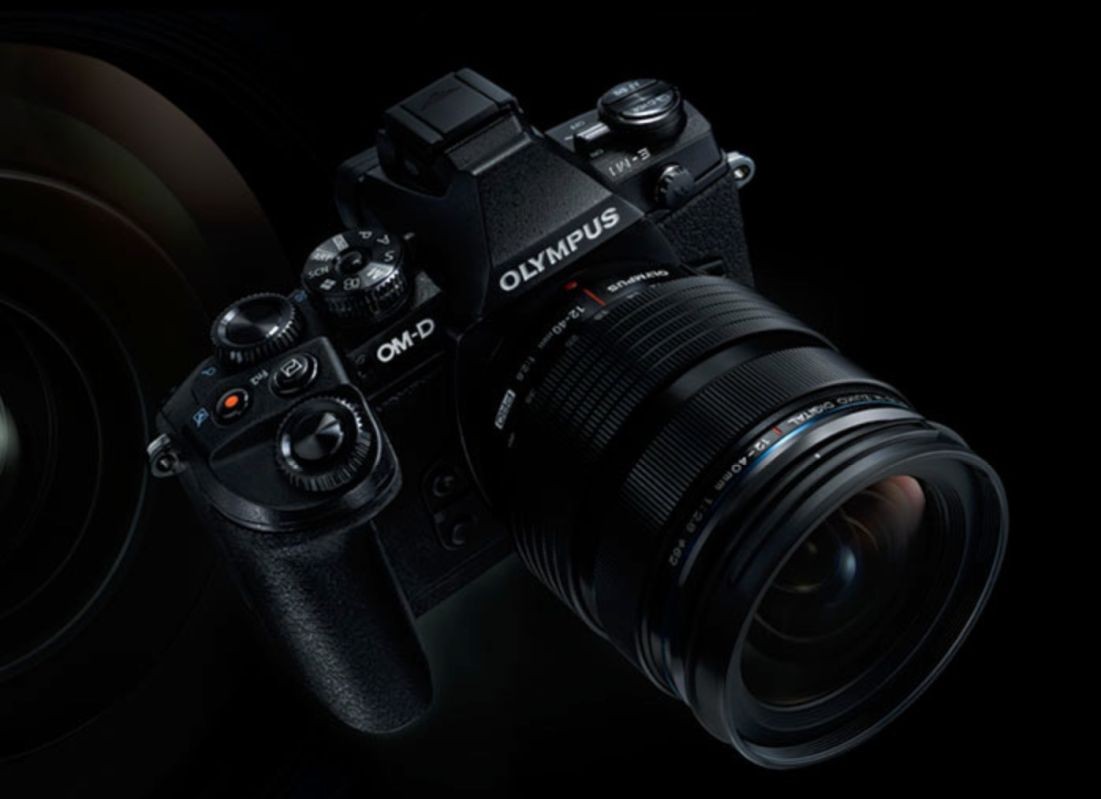
 The Olympus OM-D E-M1. Beautiful to look at, Difficult to use.
One plain and simple fact. There are too many options that a photographer uses every time you push the button, that were reinvented for the sake of reinvention. The new way didn’t make things easier to accomplish a goal, like changing the +/-EV, WB or ISO settings, it made it far more difficult. It was a nightmare to configure and equally as bad trying to recall the unidentified button or lever that was customized. To say I was disappointed would be an understatement and I have no clue why this camera gets so many positive reviews. I will admit, it looks fabulous, it feels fantastic, and it produces wonderful quality RAW files, but it’s a nightmare to operate. Who knows, maybe it’s just me.
Finally, I put off posting this review for several weeks. Most of my comparisons in this piece revolve around my experience with the Lumix GH3. Since this was written I’ve now been shooting the new Lumix GH4 and many of the issues that bothered me about the E-M1, in comparison to the GH3, are even more problematic when matched against the GH4. So that’s my preface; the following is the rest of the story.
3/23/2014 Havana, Cuba
A few weeks ago I contacted my local camera shop, F11 Photo in Bozeman, Montana, requesting their help in in getting me get THE hot new Micro 4/3 camera, the Olympus OM-D E-M1. I’ve been a big fan of the Micro Four Thirds consortium since first trying the Panasonic Lumix GF1. The Olympus OM-D E-M1 has received RAVE reviews since it was first released and I wanted to see if there was something I was missing. Marsha from F11 Photo got the ball rolling and just before I left for a week’s shoot in Cuba, I received a loaner OM-D E-M1. I was thrilled but my enthusiasm was short lived.
I have to say that I almost decided not to write this review. My reason was something my mother taught me long ago which was, “if you don’t have anything nice to say, say nothing at all”. Ok, that’s the high road to take if people aren’t depending on you for helping find what is good and not so good in the world of photography. Additionally, although I was very frustrated using this camera, it obviously must have some very positive attributes since there are lots and lots of people who love the E-M1. I mentioned to a couple of my Explorer companions my thoughts of not writing this review. I told them I was feeling badly about not being happy with my Olympus experience and I would most likely not write anything either positive or negative. That didn’t go over so well with those I shared my thoughts with. They felt I should document my findings whether good or bad. So here it is, my short term experience with the wildly popular Olympus OM-D E-M1.
In all fairness, there are several things I do like about the E-M1. Keep in mind that I’m comparing the E-M1 with my current favorite Micro Four Thirds, the Panasonic Lumix GH3. All the cons of the E-M1 are things the GH3 does very well. After using the E-M1 I’m very surprised the GH3 doesn’t’ get more positive press, especially when compared to this particular Olympus. I found the two cameras light years apart in how they handled and ease of use but nearly identical in quality of lenses and overall image quality. To keep this relatively short and to the point I’ve created a bullet list of the pluses and minuses. For those that want more details you can find them later in the post.
Pros of Em-1
- Solid feel, extremely sturdy construction
- Fabulously sharp and easy to view EVF
- Excellent manual focus with the 12-40mm zoom
- Excellent lens shade on 12-40mm zoom
- Decent high ISO capabilities
- Super fast 10 FPS continues frame rate
- Decent predictive AF though I never had the chace to run my Speeding Pooch Test
- 5 Axis on sensor image stabilization – I love this feature
Cons of E-M1
- Confusing ergonomics relating to how the camera operates – virtually no dedicated, easily identifiable buttons such as WB, ISO and +/- Exposure Compensation
- Confusing menu system to change and manage settings
- Lengthy lag when pushing the dedicated button to review an image
- Short battery life
- No built in flash
- No GPS
Solid, Sturdy Construction
This little camera is much heavier than you would first expect. It feels very sturdy and extremely well built, very much like you would imagine from a truly professional camera. I shot mostly the new 12-40mm zoom which is also fairly heavy. When I handed this package to fellow photographers they all remarked at the weight of such a small package. With both GH3 and E-M1 in hand, the E-M1 seems heavier but the specs on B&H’s web page show them almost identical in weight. Here’s the break down:
- E-M1 body= 17.44 ounces / 497 grams with battery and memory card.
12-40mm F/2.8 =13.47 ounces 382 grams
Total= 1.937 lbs 30.99 ounces
- GH3 body= 19.4 ounces / 550 g with battery and memory card.
12-35mm F/2.8= 10.76 ounces 305 g
Total= 1.884lbs 30.144 ounces
I don’t know why there seems to be such a different feel in weight but I wasn’t the only one to notice it. The numbers say different however.
Fabulous EVF
Electronic Viewfinders have been frowned upon by virtually every photographer who has ever put their eye to one. I’ve experienced it myself, but I’ve been willing to except a less than perfect EVF experience in exchange for all the other positives Micro Four Thirds cameras bring to the table. The Olympus OM-D E-M1 has improved the EVF experience dramatically. It’s not perfect but it’s much better than the GH3. The electronic EVF was probably the most positive thing about the E-M1.
Excellent Manual Focus on 12-40mm F/2.8
Olympus has chosen to use a push/pull, locking clutch, type, manual focus system on the 12-40mm F/2.8 lens. I’ve seen this option on other lenses made by third party manufacturers. What used to seem like a gimmick is now legitimized on this beautiful, silky smooth lens. I liked the feel and accuracy, no slop or play whatsoever. The 12-40mm F/2.8 is superbly crafted and very sharp.
Excellent Lens Shade
This seems like a minor thing but Panasonic could take a lesson in this department. The Olympus 12-40mm has an excellent lens shade. It’s best attribute is the locking mechanism that holds it in place. My Lumix lens attaches with a quarter spin that snaps into place. When I first bought it, it worked fine. However, over time the locking click stop that helps hold the hood in alignment has worn out and now the lens shade spins rather freely. I’ve lost many images due to vignetting at the edges from a misaligned lens shade.
Decent ISO Capabilities
The E-M1 shoots beautiful files all the way up to 1600 ISO. Similar to my GH3, once above 1600, I start to see the disadvantages of the smaller Micro Four Thirds sensor. I’m confident this will improve over time and for now it’s plenty for most situations. All the smaller sensor cameras are at a disadvantage to the larger full frame Nikon’s and Canon’s but the gap is closing and I predict in less than three years all Micro Four Thirds sensors will be at least as good as what we currently get out of our larger full frame bodies. Yes, the full frame sensors will progress as well but where is the line on what is perfectly fine for 95% of all images we produce? Time will tell.
Super Fast 10 FPS Shooting
At ten Frames Per Second, the E-M1 shoots images like an out of control Gatling gun. It seriously flies. However, those 10 FPS are for a stationary subject or I should say one that stays within the image plane. In other words, if the subject is moving towards you, the first frame is focused and the rest are not. That could still give you some amazing pictures of a gymnast on a balance beam that is parallel to the camera, but a bird flying straight at you is another story. A subject coming straight at you is the test we use for what is called Predictive AF. My Speeding Pooch Test would be equal to or possibly better than a flying bird test but unfortunately I didn’t have the camera long enough to give it a try. Maybe Olympus will send me another E-M1 to run the Speeding Pooch Test with. I would be excited to see it’s true Predictive AF capabilities.
5 Axis on Sensor Image Stabilization
This is a fantastic feature and one that Olympus has really seemed to have nailed down. They’ve obviously spent a lot of R&D on this technology and it works extremely well. In use, I don’t see any advantages to this type of IS over the in-lens version other than the fact you can use any lens that attaches to the camera. I have to say, adding Olympus lenses to my camera bag, with no way to stabilize them, is not something I’m willing to do. I just can’t imagine using any of today’s systems with out some sort of IS. The Panasonic Lumix GX7 has a remedial version of in-body IS but from other reviews I’ve read, the in-lens version in the Lumix system is far superior. With Panasonic and Olympus each choosing their own preferred way of implementing this technology, they booth lose out on one of the Micro Four Thirds advantages of compatibility. Being able to switch lenses between Micro Four Thirds systems is one of the major plusses of a Micro Four Thirds camera system and having lenses without the IS is a deal breaker for me.
Those were some of the positives, and now for the disappointments of the E-M1.
Confusing Ergonomics
When I first started looking at Olympus I picked up the OM-D E-M5. I didn’t get a chance to really test it other than across the counter of my local camera shop. But I did notice it was lacking many of the buttons I appreciated on my GH3’s, Nikon’s, and other cameras. Gone was the White Balance, the ISO and +/- buttons. Unfortunately, the E-M1 was identical in the missing button department. I thought, “there must be a good reason and I’ll just get used to it.” Unfortunately, that didn’t happen.
It seems the reason for removing these very common and necessary buttons was obviously intentional. One of the claims to fame of the E-M1 is the unimaginable number of ways you can configure this camera. You can set almost any button to do almost anything. But unfortunately, figuring out how to do that is nearly impossible. Remembering what you’ve done is equally difficult. I spent three hours over three different days trying to understand how to make the Custom Function buttons do something similar to what the GH3 and my Nikon cameras have. I never accomplished that goal. I lost numerous photo opportunities during my Cuba shoot, fumbling for the proper lever/button combination that I never did catch on to.
Confusing Menu System
The confusing and infinite options available for custom settings is compounded by the more than confusing menu system. Combine an almost unlimited number of options with a less than intuitive way to make changes and you have near photographic chaos. The icing on the cake is the nearly illegible font size and color Olympus uses for their menu text. Many folks who are moving to the smaller lighter systems are baby boomers. That’s code for we’re getting old! I’ve had better than 20/20 vision all my life but in the last five years, like many others, my close vision has badly deteriorated. The tiny fonts of light gray text are really difficult to read, even with my cheaters in place.
No Built-in Flash
Nikon and Canon have gone the route of not having a built-in flash on their professional cameras, and Olympus seems to be taking the same path. For me this would very likely be a deal breaker. I use my wireless strobes with my Nikons constantly. By having the built-in flash on the D800 or D600, I don’t have to carry Nikon’s wireless device that sits in the hot shoe to fire the wireless, off-camera strobes. To go wireless I just pop the onboard flash up, set it to Commander Mode and I’ve got some of the most breathtaking wireless lighting you can image. Amazingly, my Lumix GH3 is virtually identical in its wireless capabilities and I’m thrilled to have that advantage. The E-M1 has wireless capabilities, but only by attaching a commander flash in the hotshot. Additionally, though a small pop-up flash will never come close to lighting a dark room, I use it constantly for fill flash when photographing people during my travels. I’ve even used it in a pinch on monkeys in Costa Rica, birds in Brazil, and other situations too numerous to mention. It never puts out a huge amount of light but if the subject is within 10-15 feet it can be the difference between brightening the shadows or not. Of my Nikon gear, I have only one so-called Pro camera. The main reason I don’t buy other Pro models is due to the missing in-camera strobe. Maybe some pros don’t want it, but I’m not one of them.
Conclusion
I’ve probably said too much but I’ve done so due to encouragement I received from a couple of our Explorers. I really wanted to love this camera but it just wasn’t meant to be. I’m not happy I had to write as much as I did but I’ve made a commitment to those who travel with us, not to the camera and equipment manufacturers that might lend or give me gear. As you all know, everybody has an opinion and I’m the same as anyone else. Some have even claimed I have more opinions than I need 🙂
Though I was very unhappy with my experience, others seem to be thrilled. That said, I‘ve spent over 30 years making a living shooting pictures, earning a livelihood by no other method. That doesn’t mean I know it all, but I do understand how important it is to master your camera as quickly as possible, to comprehend it inside and out. When your camera is like an extension of your hand, your mind, you’re able to capture those fleeting moments that so often make dramatic imagery. This is where I think Olympus has gone astray. They have reinvented the wheel in so many ways on this camera that years of instincts are completely useless. Believe me, I’m all for newer, better ways of doing things, if it makes sense. But adding so many Custom Functions without a few of the everyday, WB, ISO and +/- buttons, front and center, is a serious mistake. There are just some things that work extremely well and should be left alone. This is where the GH3 excels brilliantly. It is useable on a progressional level straight out of the box. As I mentioned in my lengthy review on the GH3, I think Panasonic is building the most intuitive, superbly ergonomic cameras of ANY manufacturer right now. Ergonomics is what this issue is all about and it’s the biggest difference between the Olympus E-M1 and the Lumix GH3. Obviously all who are reading this will want to make up their own mind, but do yourself a favor. Go to your local camera store, pick each camera up and make three changes without asking the sales clerk to help you out. Change the ISO, change the WB and change the EV settings on both cameras. See which one you can do without any outside help.