

There’s been a great deal of interest lately in a macro image I posted to Facebook. The picture was a close up of a beautiful orchid showing its soft pastel colors and elegant form. The technique is quite simple and easy to replicate with minimal equipment. The key to doing this right is the proper gear and positioning flash.
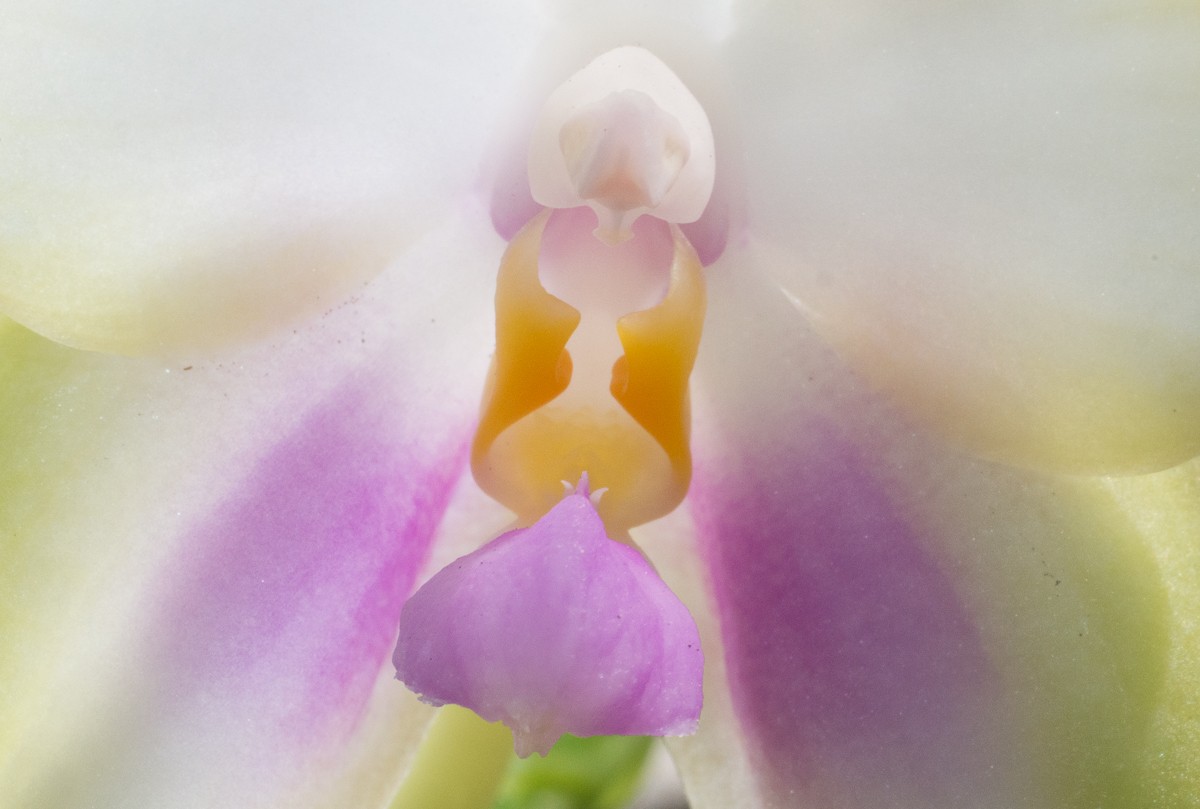
 The soft pastel colors of an orchid shot with Lumix G85, 45mm Leica macro, and off-camera FL360 flash.
The main gear you will need is:
- Camera body ( I used the Lumix G85)
- Macro lens ( I used the 45mm Leica/Lumix)
- Off-camera wireless flash (I used the Lumix FL360)
- Flash diffuser (I used the Lumiquest pocket bouncer)
Let’s talk about setting up the camera. Many of you who travel with me know I’m a huge fan of the P Mode. P for professional I like to say. Kind of a joke but kind of not if you read more about why I’ve used Program since Nikon invented Flexible Program back in the mid 90’s. But to macro work, I switch the camera to Manual which allows me to choose a specific shutter speed and aperture, independent of each other. The flash stays in TTL which adjusts the light output for either a smaller or larger aperture on the lens, depending on how much depth of field I want.
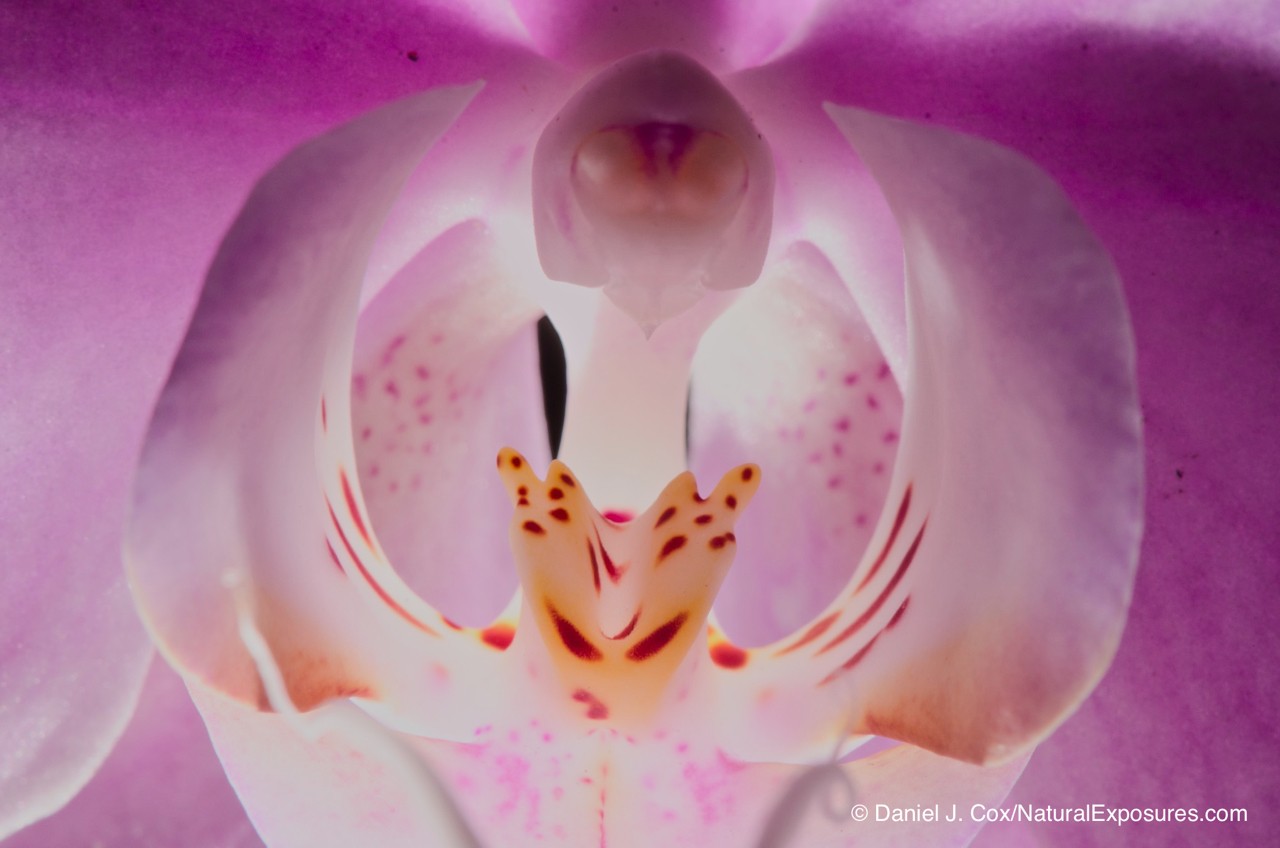
 A close up of the inside of an orchid flower. Costa Rica
Generally, I start out with about 125th of a second shutter speed and about F/8 on the Leica 45mm F/2.8 lens. You can go for even better depth of field by shooting at F/16 or F/22, but you will start to notice some minor sharpness issues do to lens diffraction. I will also often start with about 400 ISO and may go as high as 640 to 1000 depending on if I want to shoot at the smaller apertures.
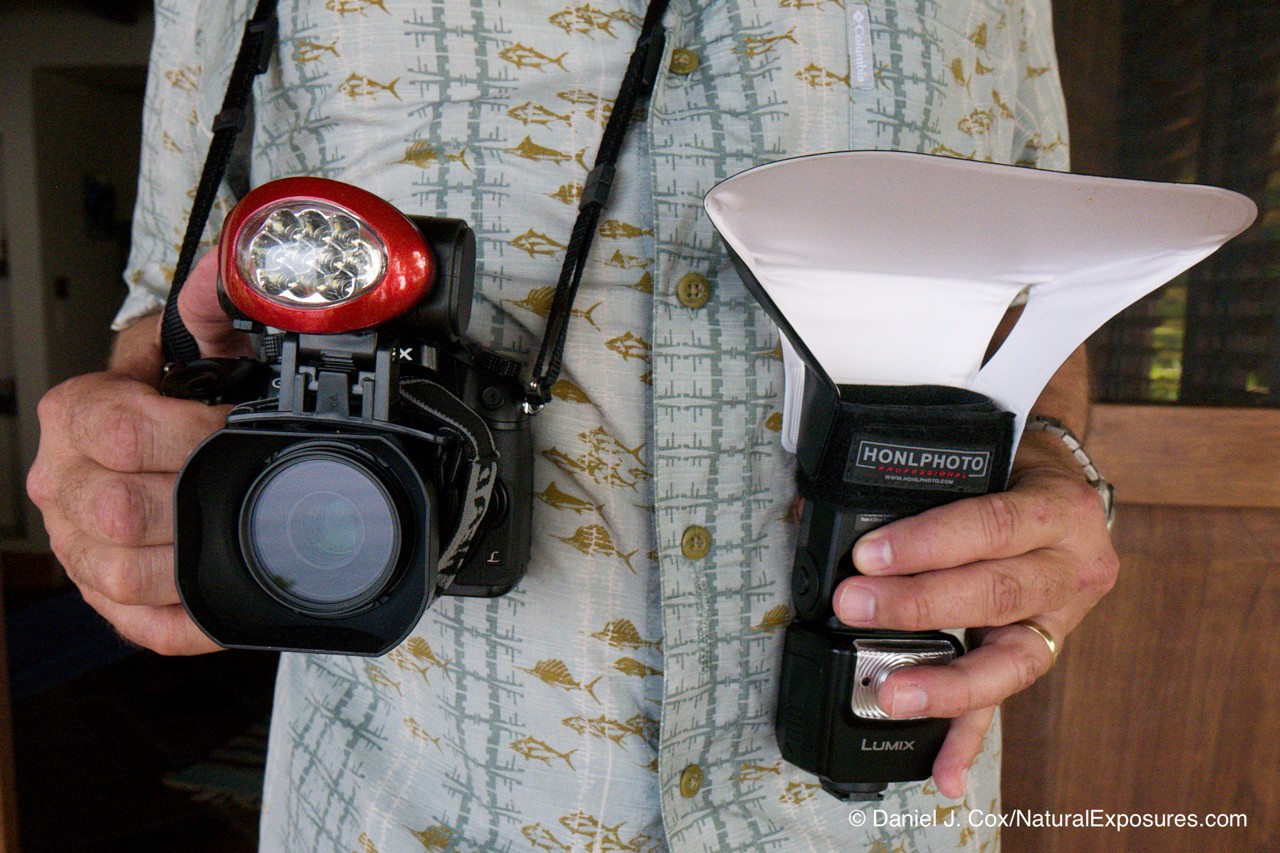
 Dan with Lumix macro setup. Costa Rica
Next most important item of gear is the wireless flash. You can use a flash that has a cord on it, but it’s so much less convenient and easy to work with. However, the technique I will explain for the wireless flash would work just fine with a flash attached by a cord. It’s just more difficult to move around with and also creates one more thing to snag or catch a beautiful orchid and break it from its stem. When working around animals and some plants I always feel less gear is better. Just one more reason why I love this setup that I’m using for macro photos.
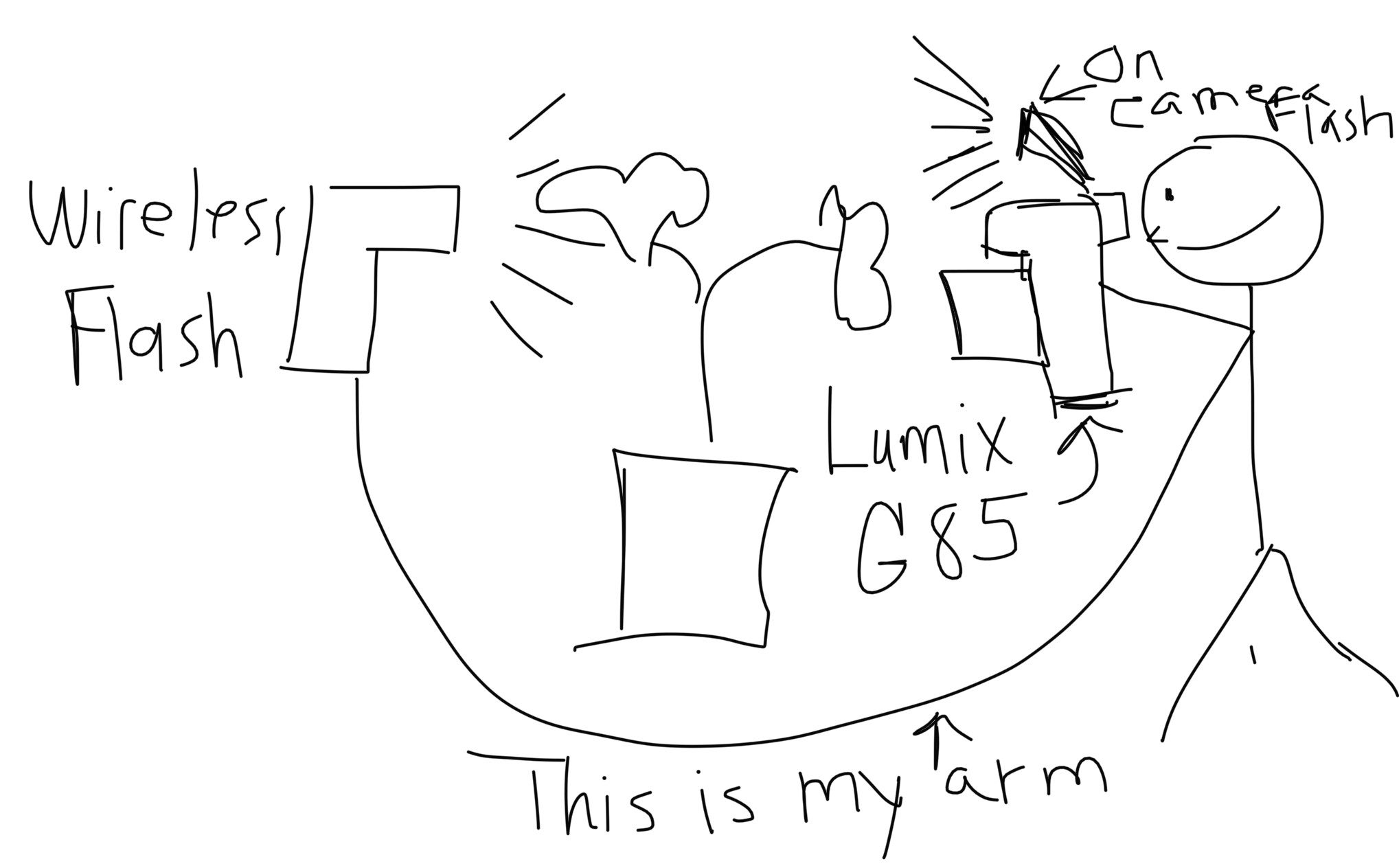
 Please forgive my poor drawing abilities but this little diagram is the best way to show how I setup the wireless flash for the photos in this Blog. My favorite way to light an orchid is from directly behind the flower.
Next item on the list is getting your wireless or corded flash set up for soft light. I do that by attaching either a Lumiquest Pocket Bouncer or the Rogue Large Diffusion Panel. Both items need a velcro strap that goes around the flash head that the panel or the bouncer will attach to. The Pocket Bouncer link above is to a kit that includes both the bouncer and the velcro strap. You can buy the strap separately, which is called the Lumiquest Ultra Strap, if you want this strap to use with the Rogue Diffusion Panel. The goal is to get something on the flash the soft light devices can hook onto.
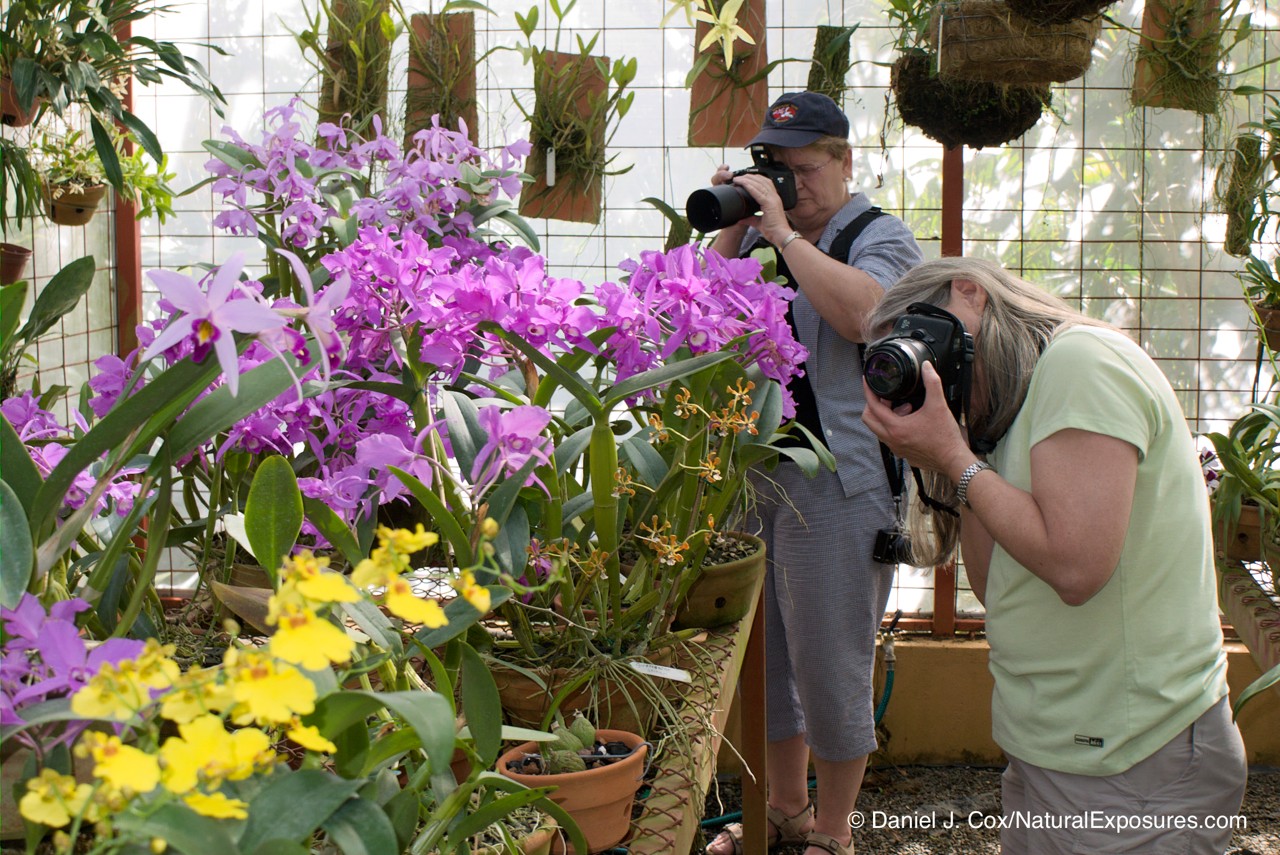
 Two of our Natural Exposures Explorers working in a greenhouse filled with flowers in Costa Rica.
Finally, we have to talk about the on-camera flash, which is what is used to fire the wireless Lumix FL360 flash when it’s being used off camera. Having a camera with a flash built in is a great benefit for this macro photography setup. The benefit of a built-in flash is why even when I was shooting the Nikon system I would always shoot Macro with a second tier, a so-called non-professional Nikon body, something like a D300 or D7000. Nikon always liked to tell those of us who wanted an on-camera flash on the pro bodies, “You don’t need one. Pros don’t want flashes built into the cameras.” I couldn’t disagree more. Lack of a built-in flash was part of the reason I only ever had one of the Nikon “pro bodies” while I had several of the second tier bodies. Thankfully, most of the Lumix cameras have a built-in flash, with the glaring exception of the new Lumix GH5 which does not have a built-in flash. Because of that the Lumix G85 will be my new go-to camera for macro photography.
OK so now that you understand why we want off-camera flash let’s talk about how to set up the Lumix wireless system. I created a short video to explain it in more detail.
So that’s about it. Macro photography is a lot of fun and not nearly has difficult as some people think. Wireless or even wired off-camera flash can make all the difference in getting quality images.