
Leica 100-400mm Comparison Lumix & Olympus
This morning I was inspired by a question on the blog to do a quick and dirty little test, comparing the Leica 100-400mm on both the new Lumix G85 (with updated firmware V.1.2), 100-400mm firmware update V1.1, and the Olympus OM-D EM-1 Mark ll.
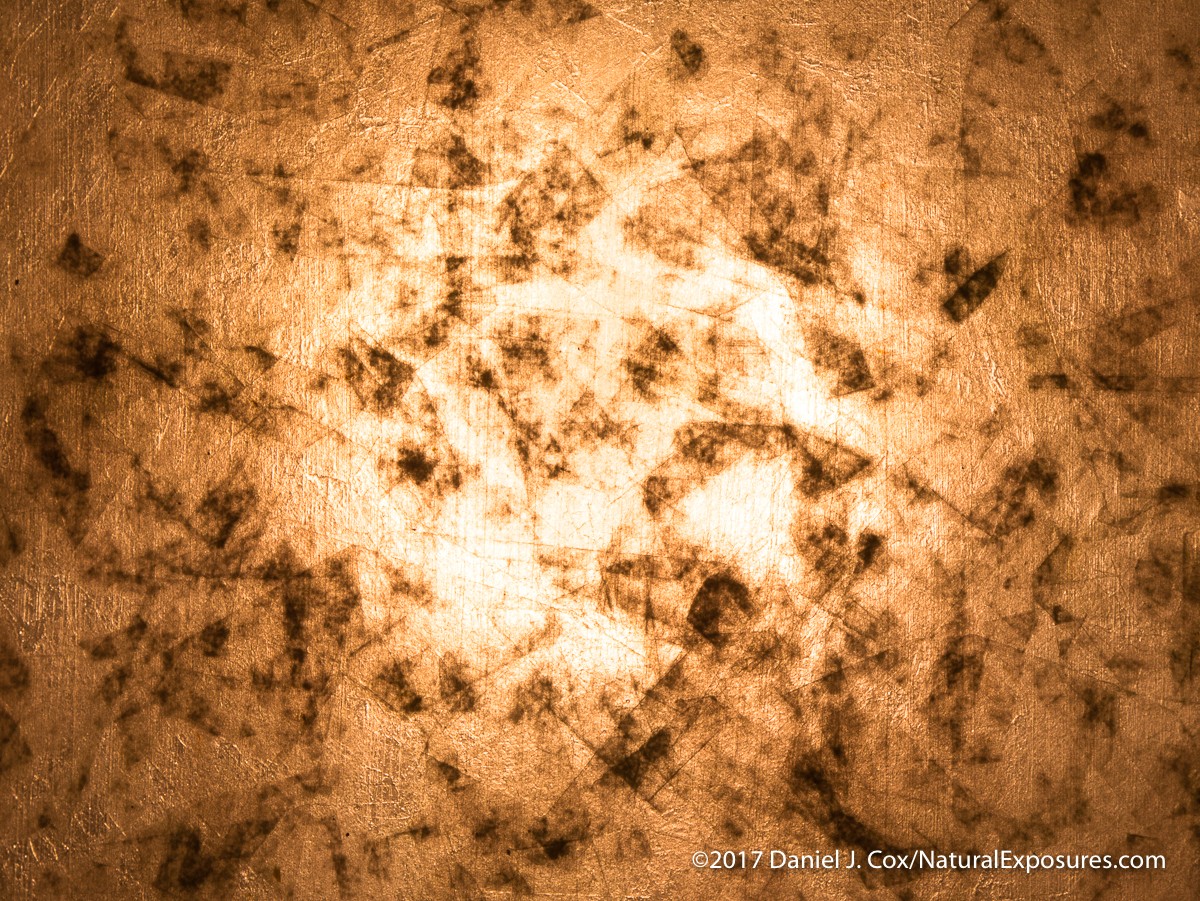
A lamp in my home was used to test the IS capabilities of the Leica 100-400mm on the G85 and OM-D EM-1 Mark ll.
Here’s the question from reader Anthony D.
Though I’m getting excellent results from the EM1.1 with the 100-400 I’m thinking whether it is worth spending on a second body for the dual IS of the G85/100-400 pair. Your insights from using both bodies in terms of IS would be most appreciated!
Well Anthony, the answer isn’t quite as straightforward as I would like, which I will explain a bit later. But in general, based on the tests I just shot, I’m seeing about a 1 stop advantage by using the Lumix G85 with the Leica 100-400mm zoom. Not as much as I would like or guessed but the images speak for themselves. I’ve uploaded the entire series of photos for anyone to download so you anyone can take a look for yourselves.
Here is the link to download all images.
Password: lumixoly100400test
Details of Test
Color or WB of Images
The photos I shot were of a lamp across the room. The Olympus files are the ones that are less orange and were shot on Auto WB. The warmer, more orange colored images are Lumix and were shot on Auto WB with custom adjustment for very warm. I did this to help keep track of which file came from each particular camera. Yes, you can see that info in Metadata, but it’s just quicker and easier to have them a bit different in color to quickly know what you’re looking at.
Position and Camera-holding Technique
I was sitting in a chair, the lens was set to 400mm (800mm Full Frame equivalent), and I held the lens exactly as I would if I were shooting in the field. In other words, left hand-bracing the barrel of the lens, left elbow braced against my side, camera to my eye and slowly squeezing the shutter for each image. Doing it just like in the field when shooting a very slow shutter speed. Each shot was focused using Single AF, waiting for the beep to confirm focus, then I took a slight breath in, held it, and pressed the shutter. All the while concentrating to keep the camera as still as possible. Just like I would do and have done, hundreds of thousands of times in actual field conditions. Forgive me for belaboring this “in the field” point. But I’ve been criticized in past Blog posts that my quick and dirty tests aren’t actually field tests and therefore suspect. I stand by the accuracy of this test even though it was shot in my house with a cup of coffee within easy reach 🙂
Camera Settings
Both cameras were set to Auto ISO. Olympus was set to Auto WB. Lumix was set to Auto WB with custom adjustment to very warm. Both cameras were set to Shutter Priority and I started with 1/8th of a second on each body. Every shot was adjusted one stop faster which took me through the shutter speeds of 1/8, 1/15, 1/30, 1/60, 1/125, and finished with 1/250th of a second.
Obviously, there could be a difference in depth of field and diffraction since many of the images were shot at the smallest aperture. Even so, we’re looking for how the two cameras did as far as Image Stabilization so I’m not concerned about depth of field or diffraction.
The Olympus was shot with its in-camera image stabilization off since that feature doesn’t work with the Leica lens. This may explain why the Lumix seems to give about 1 stop better performance (1 stop slower shutter speed) than the OM-D EM-1 Mark ll.
Conclusion
Based on looking at each image in Photo Mechanic at 100%, I rated each frame 1, 2, or 3 stars. 1 star was completely soft due to camera shake. 2 stars was probably acceptable if printed very small or shared on social media. T3 stars was very sharp. There could be some difference of opinions on the 2 stars, but I rated these as I would if I were looking at my work for a client. With that in mind, I wouldn’t send any of the 2 star images to any of the publishers I work with; only the 3 stars would make the grade. Based on the above ratings you’ll see that the G85 was giving me very sharp images at 1/60th of a second. The Olympus starting showing very sharp images at 1/125th of a second. Both pretty amazing when you understand that I was handholding an 800mm lens. Just crazy what these two companies are giving us.
Feel Free to Download All Images
I’m happy to offer all of these images to whoever wants to download them and take a closer look. As always they are for your own personal use. Feel free to share them as long as it’s not commercial in nature and the watermark with my credit line remains intact.
Here is the link to download all images.
Password: lumixoly100400test
Final Thoughts
Another thing to consider when deciding if you should buy a G85 to go with your 100-400mm is the difference in AF systems. I was reminded of the downside to Phase Detection AF with the Olympus and the Olympus 300m F/4 with the 1.4x teleconverter on my recent trip to Kenya. While in Kenya, after the first two days of not getting as sharp of images as I expected from the OM-D EM-1 and the 300mm, I finally came to the conclusion the new camera was front focusing. Thankfully, Olympus has an AF Adjust option Custom Settings Menu so I was able to fine-tune the focus for the camera and lens, and I finally started getting the results I expected. And I will say, once the AF was adjusted, it was as sharp as anything I’ve ever shot, including the Nikkor 600mm F/4 I recently sold.
This whole AF adjustment idea came about by way of Canon when they released the Canon EOS 1 Mark lll that had horrific either front or back focus issues. It took them forever to get it figured out and, if I recall correctly, the problems only ended once they released the Mark lV. Nikon also had back focus issues that I dealt with for two years in their D2H and D2X cameras. Eventually, both Nikon and Canon added the Micro Adjustment AF option to all their high-end bodies. What makes me a bit crazy is how these outrageously expensive cameras and lenses can be problematic right from the factory. It suggests to me that Contrast Detection AF, the only system Lumix uses, is much more accurate since it focuses off the camera sensor. With Phase Detection AF the camera uses a separate module that’s separate from the sensor the image is captured with. Having Contrast Detection AF where the focus is determined to be correct, actually on the sensor, is definitely more accurate.
That said, many are going to argue that Contrast AF isn’t as fast, and so far they would be right. But the G85 did exceptionally well on relatively fast moving subjects during my last shoot in Kenya, and the coming GH5 is rumored to be exceptionally fast and accurate. Once I get the GH5, some time hopefully in early spring, I’ll be putting the GH5, the G85, and the Olympus OM-D EM-1 Mark ll through the Speeding Pooch AF Test.
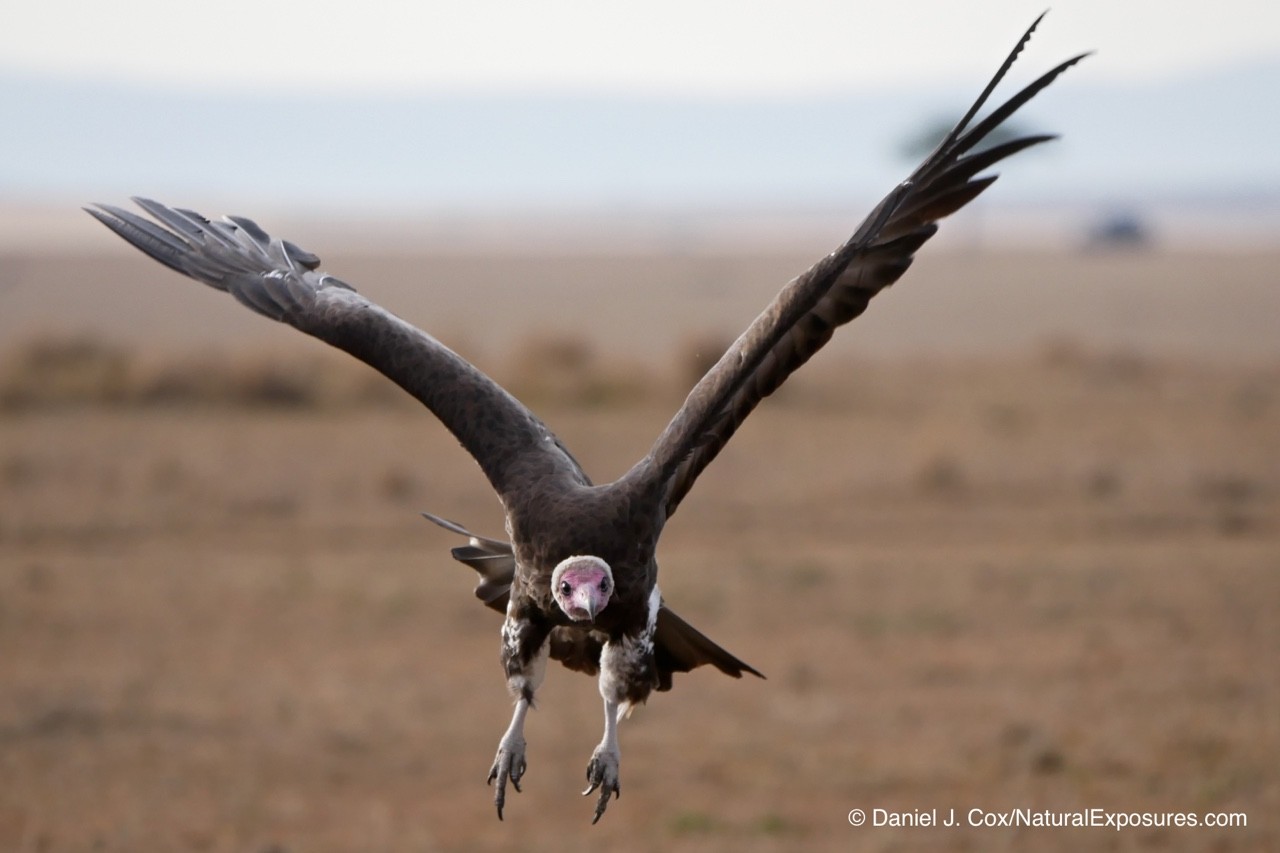
Lappet-faced vulture, Masai Mara National Reserve, Kenya. Lumix G85 with Leica 100-400mm zoom
Finally, there is a substantial benefit of using the 100-400mm with the G85 because it just works. With the EM-1 you have to go in and turn the camera IS off. To me that’s a pain in the keister. With the G85 there’s no need for dinking around trying to figure out what settings to turn on or off like you do with the Olympus. However, in general the 100-400mm does for very well, just not as convenient as it is with the G85.
Let me know if you have any questions in the comments below. Keep in mind I’m about ready to publish a so-called “review” of the Lumix G85 which I’ve been shooting for the past three months. It will contain details based on the way I typically use these cameras. Once again, I’ll mention that I’ve been criticized for “reviews” that were so-called “late to the party” as one person put it. But hey, I don’t just jump on a camera and start spewing the same details any half wit can find in the manual or brochure. I might be late to the party, but my reviews are based on having actually used the camera for a relatively decent amount of time. Stay tuned, hope to have it out within a week.
One last note. I forgot to check if the issue where the 100-400mm would go wonky and freeze up when the AF Limiter Switch was set to 5-Infinity. I’m happy to say this was fixed and it works perfectly with the Olympus camera now.