

Editorial Note: I’ve amended this blog post due to an overriding interest in the fact I’m no longer a Lumix Ambassador. In all fairness to the folks at Panasonic, I’m still a very big fan of their equipment and the Ambassador news was taking away from the real reason for this post. I’ll continue to share the benefits of the Lumix system as well as other systems I’m working with. All under the umbrella of a freelance tester with no ties to any company.
DIY lens tests – I’m not a scientist
Something I’ve always done is test lenes. It started with shooting brick walls behind F-11 Photo here in my hometown of Bozeman, Montana. A flat brick wall is great for tests due to it being an even plane with lots of details. I switched to the studio because of the potential risk of camera shake when using long telephotos.
Flash is the key to sharp DIY lens tests
Many photographers don’t realize a flash is a tremendous tool for stopping action. Any kind of action which includes shaky hands. Jim Harmer of Improve Photography explains the speed of a strobe light extremely well in his blog post. A quick FYI: Strobe and Flash are one and the same. As he shows, a typical strobe/flash that’s made for a traditional mirrorless or DSLR camera produces a very fast, intense blip of light when fired. Most professional flashes also have the ability to adjust the power of the flash output.
The lower the power, the faster the light emitted. This makes for what equates to a very fast shutter speed. Those of you who know photography understand that stopping movement of any kind will produce much sharper images. The faster the shutter speed used, the sharper your image will be. This is most important when shooting longer telephotos such as the Leica 100-400mm, Sony 200-600mm, or other telephotos/long zooms. Powerful telephotos are nothing more than monster magnifiers. They magnify the subject as well as ANY movement while taking the picture. And that’s why I use flash for testing lenses.
And this is how
One of the issues I had to solve was making certain the lens I was shooting was completely parallel to the test target. To accomplish this as close as possible I used two tools. One was LensAlign, and the other was a laser measuring device. Both were used to make certain the camera plane was as parallel to the newspaper as possible.
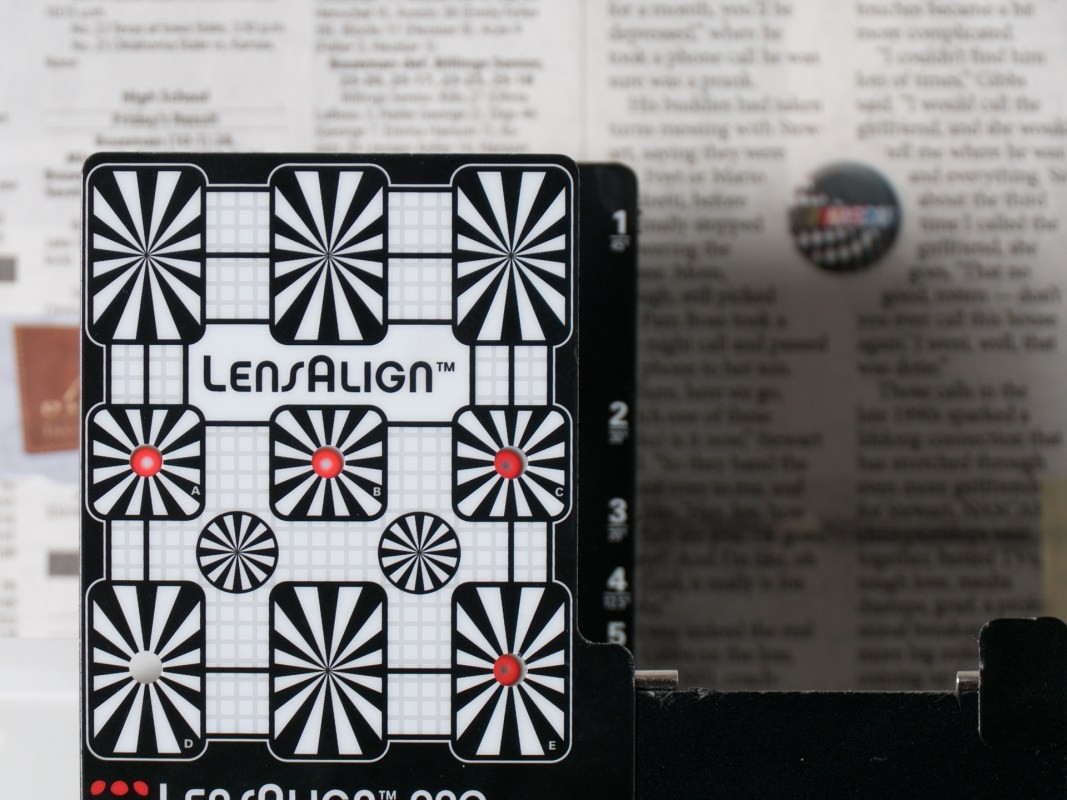
The laser measuring device was used to measure the distance between the sidewall and the middle of the newspaper. I did the same from the middle of the camera to the sidewall. Is this perfectly scientific? No, the wall could be slightly off. But it’s what I have available and I find it works quite well.
I’m no scientist, but I did stay at Holiday Inn Express last night
You may have noticed I keep reminding you my tests are not perfectly scientific. And that’s because I’m well aware of the folks out there who love the chance to try and show their intelligence by knocking others down. I’m putting them all on notice that I ALREADY know my tests are not perfect. That said, my test procedures offer the ability for the do it yourself crowd to get an idea for themselves.
In a perfect world, I wouldn’t have to do these tests. DXOMARK does a much more scientific version of these same tests. Unfortunately, they’re slow to get new lenses, and some lenses they never test all. For example, the newest Lumix camera they have listed, for pairing with the Lumix/Leica/Olympus lenses, is the Lumix GH3. That’s three camera generations back.
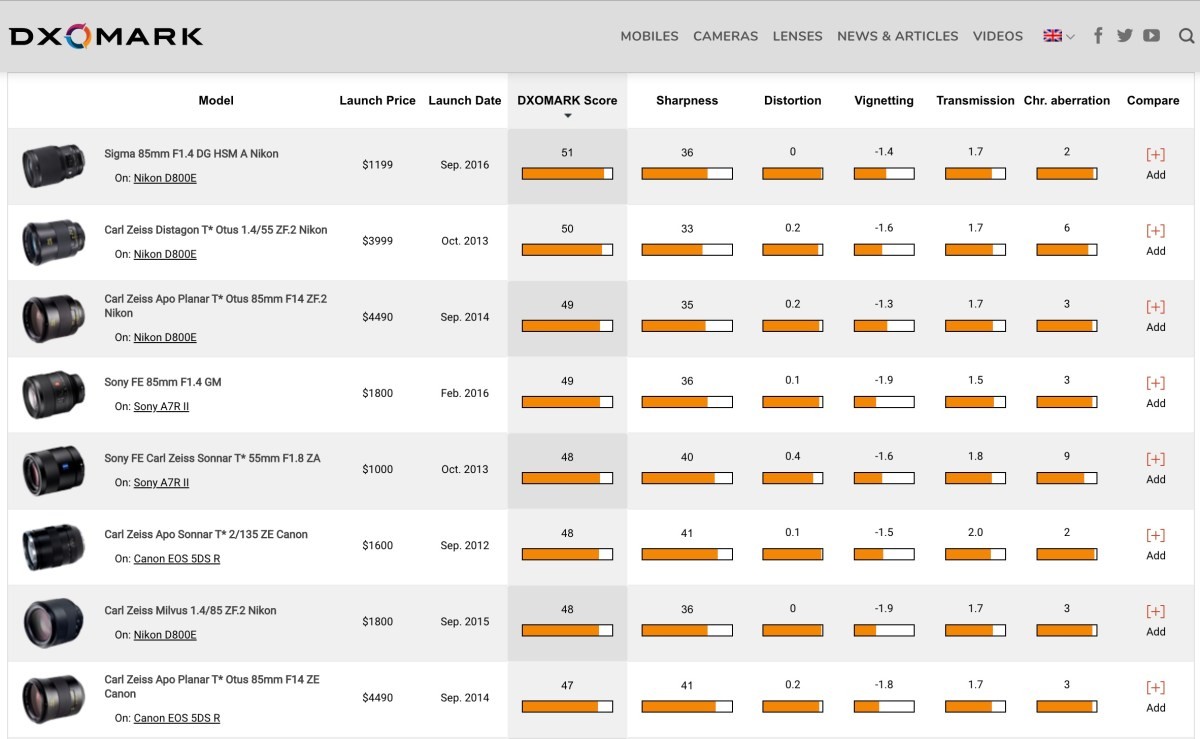
They do list the most current cameras, like the G9, under the camera tab. But the current cameras are missing when I go to the lens tab and try to add a lens to a camera. If you guys and gals know something I don’t on this subject please leave details below. If you can find any of the lenses mentioned in this video and are able to combine them to a current camera I would love to know how you did it. Click this link for DXOMARK website for lens tests.
The results
From the tests I shot, I found the Sony 200-600mm to be very sharp. Not perfect edge to edge but no issue I would be concerned about for serious work.
The Leica 100-400mm old and new were pretty much the same and both very good from edge to edge. My hope that the more recent sample was sharper was unfounded.
But without a doubt, the sharpest lens of the bunch was the Olympus 300mm F/4. Shooting it with the 1.4X teleconverter showed almost no degradation in image quality and was still very, very sharp edge to edge. It was almost the same for the 300mm with the 2X teleconverter. Not as good as the 1.4X but not a huge difference.
For those who need a nap, you can follow along in the videos I’ve created below. I did a comparison of all these lenses at 100% in Lightroom. If you don’t want to download the images yourself and go through them, these videos will give you an out. Be warned, however, you may nod off.
Leica 50-200mm (Older Sample) Versus Olympus 40-150mm
Leica 50-200mm (New Sample) Versus Olympus 40-150mm
Olympus 300mm with 1.4 & 2X teleconverters
Sony 200-600 Versus Olympus 300mm F/4
Sony 200-600mm Versus Leica 100-400mm@350 New
Sony 200-600mm Versus Leica 100-400mm@400mm New
That’s if for now. Do me a favor and head over to the Naural Exposures TV channel on YouTube and SUBSCRIBE. And don’t forget about the folks over at Bozeman Camera. The small town store, big-time destination dealer I like to call them.
Thanks for stopping by and joining the conversation. You can follow this link to find high-resolution JPEGs of the test images. Feel free to download them for your own personal use and inspection. I’ve named the images I reviewed with the names of the lenses. I also included a couple of different samples of each image. You will have to check metadata if the image is missing the PostIt note showing which lens was being used.